



I’ll never forget the moment I realized Coach had changed. There I was, getting my nails done, when I spotted it across the salon—the Lana mini bag in all its structured, logo-adorned glory. And I wanted it. Me, someone who had once written off Coach entirely as something my mom’s generation carried.
What happened? How did a brand I’d actively avoided become something I was genuinely coveting?
The Wilderness Years
To understand Coach’s resurrection, you have to understand how far it had fallen. By the early 2010s, Coach had become ubiquitous to the point of invisibility. The brand had chased growth so aggressively that its signature “C” logo was everywhere in outlet malls, department stores, and on every other arm. The exclusivity had evaporated. The cachet was gone.
For younger consumers, especially, Coach felt dated, accessible in the worst way. It was the brand your aunt carried, not the one you saved up for. While luxury houses like Gucci and Saint Laurent cultivated mystique, Coach felt mass-market and middle-aged.
How Did We Get Here?
To understand the fall, you need to know the rise. Coach started in 1941 as a Manhattan leather workshop, building a reputation for quality American craftsmanship. Designer Bonnie Cashin joined in 1962, creating the iconic brass turnlock and establishing Coach’s DNA: beautiful, practical leather goods made for American women’s lives. The brand grew steadily, went public in 2000, and seemed unstoppable.
Then came 2001 and the Signature “C” pattern. It was supposed to be a way to make Coach accessible, and it worked too well. The logo proliferated everywhere. Sales exploded, but by 2012, Coach had a problem: they’d built a billion-dollar business on a brand that younger consumers dismissed entirely.
The Turnaround Begins
The transformation didn’t happen overnight. It started in 2013 when Coach brought in Stuart Vevers from Loewe as Creative Director. His mission was clear: reclaim Coach’s authentic American identity and make it feel contemporary again.
First, they pulled back from the logo saturation that had diluted the brand. Vevers dove into the archives, finding inspiration in 1970s Coach—before the logos, when it was just beautiful leather. They focused on quality, craftsmanship, and silhouettes that felt fresh rather than frumpy.
The Gen Z Discovery
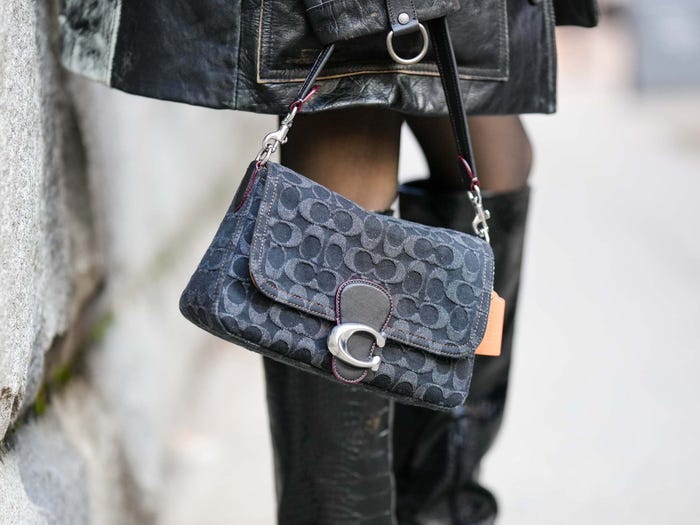
But here’s where it gets interesting. While Coach was methodically rebuilding, something unexpected happened: Gen Z discovered vintage Coach.
On platforms like Depop, Poshmark, and vintage Instagram accounts, younger shoppers started finding Coach bags from the 1990s and early 2000s—the pre-logo-explosion era. These vintage pieces had patina, character, and none of the overexposure baggage. Suddenly, Coach had credibility with exactly the demographic that had rejected it.
The brand became a treasure hunt for thrift store enthusiasts, offering a sustainable way to access high-quality leather goods. And Coach was smart enough to lean into it rather than fight it.
The Modern Era: Strategic Moves That Worked
Coach’s comeback wasn’t luck; it was strategy. They introduced Instagram-ready bags, such as the Tabby and Pillow Tabby, which became social media sensations. They pursued collaborations with Selena Gomez, the Basquiat Estate, and Jennifer Lopez that brought cultural credibility. They launched Coach (Re)Loved to celebrate and authenticate vintage pieces.
And bags like the Lana mini, the one that caught my eye, combined Coach’s leather expertise with contemporary proportions that actually worked with how people dress now.
The brand also made smart choices about pricing. While true luxury marched toward four-figure handbags, Coach stayed in that accessible luxury sweet spot of $300-$500. You could actually save up for a Coach bag without it feeling impossible. In an era of economic uncertainty, that mattered.
The TikTok Effect and Cultural Timing
Social media accelerated everything. #CoachBag has billions of views on TikTok. Influencers showcase their vintage finds alongside new purchases. The brand engages authentically with online communities rather than talking down to them.
But Coach also benefited from perfect cultural timing. The Y2K revival made vintage Coach cool again. Rising luxury prices made Coach’s accessible pricing appealing. Sustainability trends aligned with Coach’s durability and lifetime repair culture. As “quiet luxury” became a buzzword, Coach’s heritage as an authentic American leather goods company suddenly felt relevant rather than dated.
What Really Changed?
So what transformed Coach from has-been to must-have? It wasn’t just one thing. It was patience, strategic creative direction, a willingness to let go of what wasn’t working, and the humility to let a new generation rediscover them on their own terms.
Coach didn’t try to become Supreme or Jacquemus. They leaned into being Coach but the best, most focused version of themselves. They remembered that they’d always made good bags; they just needed to make good bags that felt exciting again.
Modern Coach rests on core principles: optimistic luxury that brings joy rather than anxiety, inclusive American style that’s democratic rather than gatekept, craftsmanship that honors their workshop origins, and gradual evolution that maintains their values while adapting to contemporary tastes.
What makes them special? Eighty-plus years of authentic heritage, an accessible luxury price point, practical design philosophy, an extensive archive to draw from, a lifetime repair culture, and genuine New York creative roots.
Conclusion
The story of Coach is ultimately a story about authenticity, patience, and the courage to be yourself in a market that rewards imitation. It’s about a brand that lost its way, found it again, and emerged more confident and relevant than ever.
From a small Manhattan workshop in 1941 to a global icon in 2025, Coach has proven that the best journeys aren’t straight lines. Sometimes you have to get lost to find yourself. And sometimes the brand you dismissed years ago is exactly the one you’ll fall in love with when you’re ready to see it clearly.