


In July 2015, Moiz Ali bought a domain name on GoDaddy. It was his birthday.
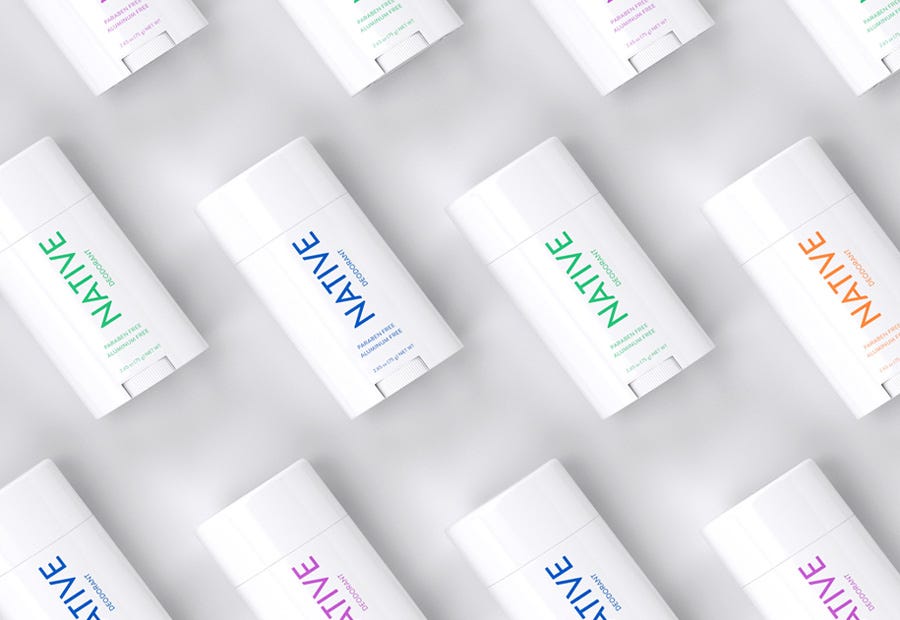
He had $1,000 of his own money and one idea: a natural deodorant people might actually buy online. Twelve days later, he launched a website. There was no product in hand, just 3D-rendered images of a deodorant stick he hadn’t manufactured yet. He planned to take orders first, then figure out the supply.
Day one: one sale.
He nearly shut the whole thing down.
The Setup: A CVS Aisle and an Unreadable Label

Moiz Ali was 30 years old and had already sold his first company, Caskers, a craft spirits e-commerce business he’d started with a law school friend. That exit was seven figures. Comfortable money, not retire-forever money. He was looking for his next move.
He found it reading the back of a deodorant can while standing in a CVS aisle. Aluminum Zirconium Tetrachlorohydrex. Isopropyl Palmitate. Cyclopentasiloxane. He couldn’t pronounce a single ingredient. His sister was pregnant at the time and asking questions about the chemicals in her Dove deodorant. And he’d noticed something else: natural deodorant was the number one product on Etsy in 2015. A real market, mostly being served by small artisan makers out of their home kitchens.
The mainstream natural options that existed felt clinical or ineffective. There was a gap: a natural deodorant that worked, looked premium, and didn’t require you to identify as a health food person to buy it.
In Ali’s own words, his goal was to do what Whole Foods did to food, but to the deodorant category. Not something “very hipster or grungy, but something mainstream.”
He went on Etsy, found the best natural deodorant makers, and asked if any of them would white-label their product for him. It took dozens of rejections before one person agreed to a woman making deodorant in her hobby room in Southern California. He placed his first small order.
Then he launched.
The Launch: No Product, No Photos, No Guarantee
He launched the website with zero deodorants in hand and no photos of the physical product. Instead, he found someone to 3D render the product to use as images on his site. He wasn’t sure people would shop for deodorant online, so he treated the launch as a test; he would order the deodorant once he made sales.
He decided on the price of $12 a stick by working backwards from his costs. Six dollars to manufacture, three dollars to ship, one-fifty in packaging. The math pointed to $12, two to three times the price of drugstore deodorant. He didn’t discount his way in. He set the price that made the business work and bet that the product would justify it.
Day one: one customer. Ali was deflated. Then a connection helped get Native bumped onto Product Hunt’s front page. Day two: dozens of orders. He called his manufacturer and placed his first real production order. He packed and shipped those early sticks himself.
His reaction to a friend asking what he knew about deodorant captures everything about his approach:
“I know nothing, and in six months, I’m going to become one of the world’s leading experts on deodorant. I’m just going to spend my time learning, and I’m going to figure it out.”
The First Year: One Employee, Thousands of Emails
For the first year, Ali was the only employee, handling everything himself.
The product, by his own admission, wasn’t very good. It was powdery, hard to apply, and occasionally had a consistency problem in the summer heat in May 2016. As temperatures rose, the deodorant started melting to the consistency of lotion. Rather than quietly recall it, he stopped production, rushed an improved formula that had only been tested on a dozen people, and got it to market as fast as he could.
What saved him wasn’t the formula. It was his relationship with customers.
Ali emailed every single customer for the first two years of the business with the same message:
“You just got a stick of Native deodorant. Love to know what you think about it. If you love the product, please leave a review on our site. If you don’t, reply to this email and tell us what you don’t like, and we’ll try to fix it.”
The complaints came in consistently for the first year: too powdery, too hard to apply, too many oils. He listened. He iterated. The repeat purchase rate, which tells you whether people are actually satisfied, started at around 20%. It climbed steadily to 50% as the product improved. He bought deodorant from every competitor and noted every detail that made them better. The formula changed dozens of times.
Native went from a couple of hundred dollars in revenue per month in July 2015 to $75,000 in revenue per month by January 2016, and it was still just Moiz. By May 2016, they were doing $100,000 a month.
“I wish Silicon Valley didn’t glorify massive fundraising rounds as much as they do,” he later said. “People don’t respect how much one person can do.”
The Growth Engine: Discipline Over Flash
As revenue grew, Ali built each piece of the business the same way he built the product: methodically, based on what the data actually said.
Pricing held firm. He never discounted. The $12 stick gave him a real gross margin enough to invest in customer acquisition while building toward profitability. He understood early that the economics of DTC only work if you know your customer’s lifetime value and never spend more than that to acquire them.
Subscriptions compounded. He built a subscription option offering customers 15% savings with multiple delivery interval choices. This turned episodic buyers into predictable recurring revenue, compressed his payback period on customer acquisition spend, and gave the business a foundation that looked genuinely attractive from the outside.
Advertising was measured, not sprayed. He tracked every Facebook and Instagram dollar against long-term customer value, not just first purchase. When he found a channel that worked, he doubled down. When a conference in San Diego introduced him to better Facebook advertising techniques, he came back and grew 400% in 60 days.
Retail was ignored — intentionally. Costco called. Whole Foods called. Every major retailer you can imagine called. He turned them all away. He had a just-in-time inventory system for DTC that could barely keep up with demand; he never had excess product to ship to brick-and-mortar retailers. He stayed focused on what was working.
The revenue progression tells the story clearly: January 2016, $50,000 in monthly revenue. June, $250,000. November was the first $1 million month. The following November, $5 million.
Within 18 months of launch, Native had $13 million in cash in the bank. By the time P&G came calling, it was generating close to $1 million in EBITDA per month.
The Exit: $100 Million, 2.5 Years In
In November 2017, Procter & Gamble acquired Native for $100 million in cash. It was P&G’s first acquisition in nearly a decade, and until the deal closed, Native hadn’t sold a single stick of deodorant outside its own DTC website.
Ali hadn’t set out to sell. But the business was at an inflection point; every major retailer in America wanted in, and scaling into retail would have required a different kind of company: more capital, more inventory, more infrastructure. P&G could provide all of it.
For P&G, the acquisition made strategic sense on multiple levels. They were under pressure from activist investor Nelson Peltz to acquire on-trend brands rather than just cut costs. Native offered a beachhead in the growing natural personal care segment, a proven DTC playbook, and something P&G couldn’t manufacture internally: authentic customer trust built on a genuinely better product.
Ali stayed through early 2020. By the time he left, Native was doing $60 million a year in Target alone and had become the third best-selling deodorant brand in the store behind Secret and Dove. P&G extended the brand into body wash, hair care, and lotion. The $1,000 birthday bet had become one of the most successful consumer brand exits of its decade.
What It Actually Teaches
The Native story gets told as a fairy tale, a guy with a great idea who got lucky with timing and cheap Facebook ads. That’s comfortable, so you can get off the hook.
What Ali actually did was execute a set of principles with unusual consistency and discipline.
He launched before he was ready and used reality to course-correct, rather than spending months perfecting something in private before exposing it to customers. He priced for margin from day one and never flinched, because he understood that discounting is how you build a business that can never become profitable. He treated every customer email as product research. He ignored every shiny retail opportunity until the core business was undeniably working. He built a subscription model not as a marketing gimmick but as a genuine retention mechanism that made his unit economics legible to anyone looking at the company.
And he did almost all of it alone, for longer than most founders would tolerate.
The lesson isn’t that you had to launch in 2015 to build Native. The lesson is that there is another Native launching today, and the founders building it are probably being told they should raise more money, open more channels, and move faster. Most of them won’t need to do any of those things.
They’ll need to do what Moiz did: make something people actually want, listen until they’re sure of it, and have the discipline not to complicate what’s working.
If this was useful, please share it with anyone who needs to hear it.
New Article drops every Tuesday.
Be Bold. Be Real. Be Anomalous.
Great article - thanks for sharing this story