


Monopolies don’t fall apart on their own. They require a specific kind of challenger, one that understands not just what the incumbent controls, but how it controls it. The mechanism matters. Break the mechanism, and the whole structure comes down.
Three companies did exactly that.
Warby Parker attacked an economic monopoly built on vertical integration.
Uber dismantled a government-protected monopoly propped up by artificial scarcity.
Spotify survived a platform monopoly enforced by a 30% tax on its own existence.
Each fight was different. Each win was instructive.
The Economic Monopoly: Luxottica and Warby Parker
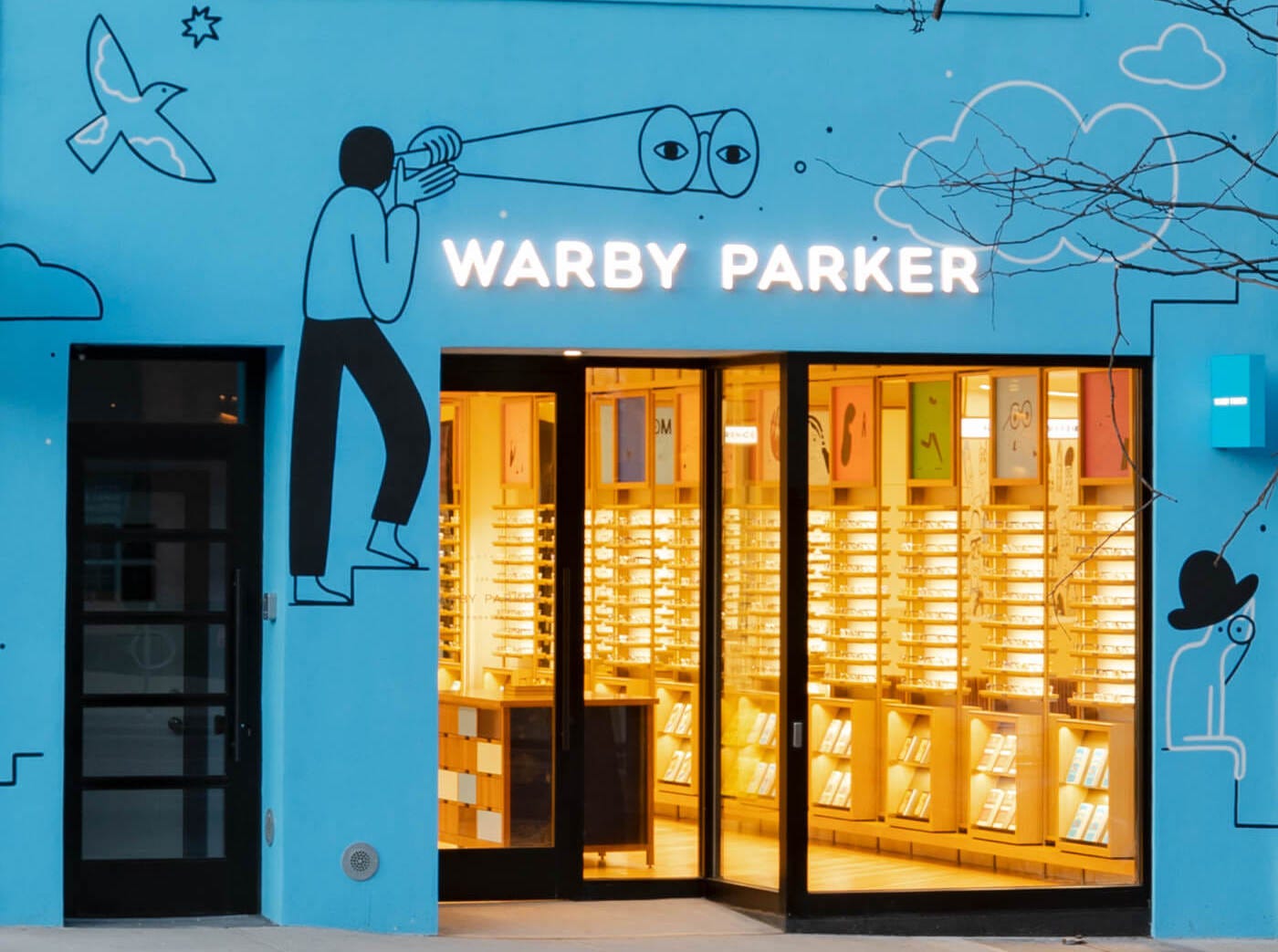
Before Warby Parker existed, the eyewear industry was one of the most quietly predatory monopolies in American consumer goods. Starting in 1961 as a small workshop in Agordo, Italy, Luxottica grew from a parts manufacturer into a vertically integrated empire, designing, making, distributing, and selling glasses all under one roof. Over decades, it executed a simple but devastating playbook: buy everything. It acquired Ray-Ban in 1999, Oakley in 2007, and built a portfolio that let it dictate industry trends and set pricing standards across both luxury and sports eyewear. Then it bought the stores. After acquiring Sunglass Hut and LensCrafters, Luxottica controlled an estimated 80% of luxury eyewear manufacturing and roughly 50–60% of global retail optical. You didn’t choose to work with Luxottica. You realized you had to.
The result for consumers was brutal. Frames were being sold at prices 20 to 25 times their manufacturing cost. A $13 frame hitting shelves at $300 or more wasn’t a pricing quirk; it was the system working exactly as designed.
The four Wharton students who founded Warby Parker in 2010 stumbled into this while researching why glasses were so expensive. The answer kept coming back to one company. Luxottica had a near-monopoly on the eyeglass and sunglasses market; prices were too high, products weren’t great, and the shopping experience was poor.
Their insight wasn’t just that the prices were wrong; it was why they were wrong. Luxottica’s power came from owning every link in the chain. So Warby Parker built their own chain. They created a vertically integrated model that bypassed retailers and middlemen, transferring the cost savings directly to consumers. Glasses started at $95. The Home Try-On program ships five frames to your door, solving the one genuine objection to buying glasses online: you can’t see how they look on your face.
As co-founder Neil Blumenthal put it, “The market charges too much for glasses, and that was due to a consolidation of power within the industry that had been built up over decades,” which was exactly what allowed Warby to come in and charge $95 for a $500 product.
By 2025, Warby Parker had reached $872 million in annual revenue with 323 retail stores across North America. They didn’t beat Luxottica at its own game. They changed the game entirely.
The Government Monopoly: Taxi Medallions and Uber
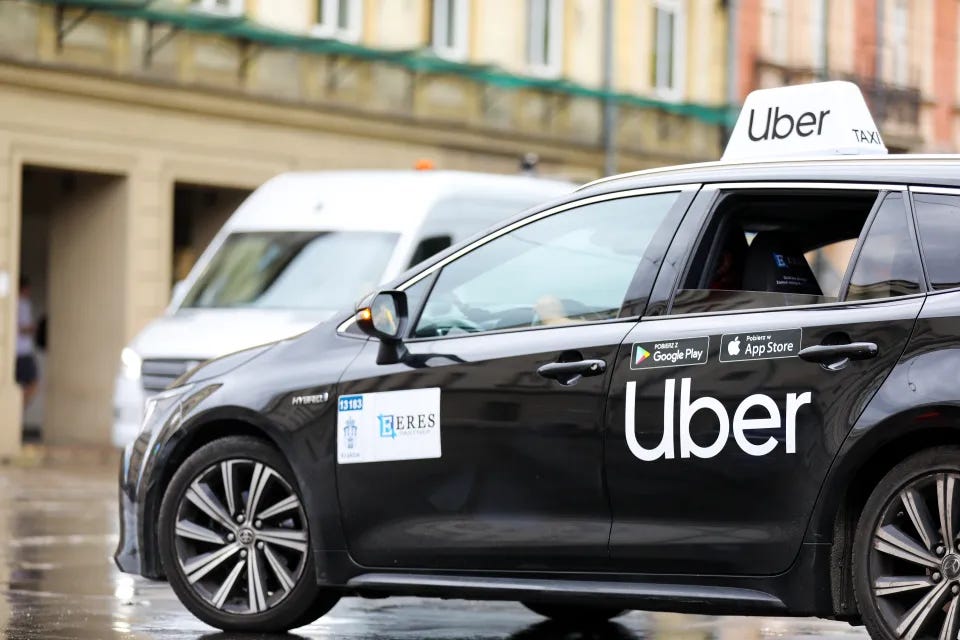
Luxottica’s monopoly was built through acquisition. The taxi industry was built through legislation, which made it, in some ways, even harder to crack.
The medallion system was a masterpiece of artificial scarcity. Cities required taxi companies to purchase government-issued medallions to operate legally. The supply was capped. The cap meant prices stayed high. In New York City, medallion prices peaked at over $1 million each. The system benefited medallion holders enormously and consumers almost not at all. No competition meant no incentive to improve service, invest in technology, or lower prices.
Uber’s origin story is almost too clean: Travis Kalanick and Garrett Camp couldn’t get a cab in Paris in 2008. That frustration became a company. But the real strategic insight wasn’t the app; it was the classification. Uber entered as a technology company, not a taxi company. Drivers weren’t taxi drivers. They were independent contractors using personal vehicles. That framing put Uber outside the regulatory framework that the medallion system depended on. You can’t require a software platform to buy a taxi medallion.
From there, Uber’s expansion followed a deliberate sequence: target young, affluent, tech-comfortable early adopters in dense urban markets; build supply and demand simultaneously on both sides of the marketplace; deliver an experience so obviously superior to taxis that switching became reflexive. GPS tracking, cashless payment, upfront pricing, and two-way ratings were each a direct attack on a specific failure of the incumbent.
The medallion system collapsed not because regulators dismantled it, but because consumers stopped caring about it. By the time cities fought back with new regulations, Uber was already embedded in daily life. The monopoly didn’t lose a regulatory battle. It lost the consumer.
The Platform Monopoly: Apple and Spotify
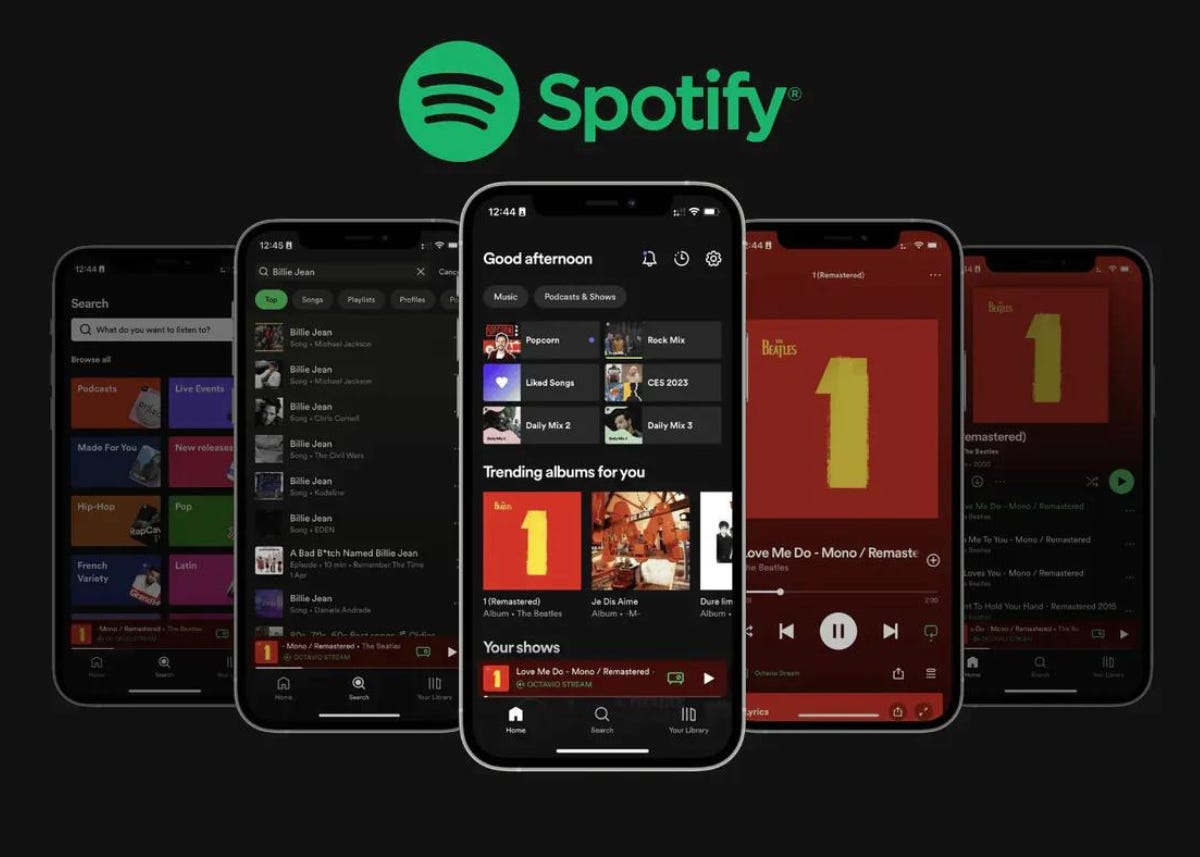
Warby Parker’s enemy owned the supply chain. Uber’s enemy owned the permits. Spotify’s enemy owned the device.
When Spotify launched in 2008 and expanded to the US in 2011, the company faced two simultaneous existential threats. The first was the music industry itself, alarmed by the sudden erosion of their business, the major record labels finally signed licensing deals with Spotify and quietly took an estimated 14% combined stake in the company. The second threat was Apple, which controlled the platform through which most people would actually discover and use Spotify.
The mechanics of Apple’s leverage were precise. Apple took a 30% cut of any Spotify subscription paid through the App Store. One of Spotify’s main competitors was Apple Music, which paid no such toll. Apple also prohibited Spotify from telling its own users that cheaper subscription options existed outside the app. In many cases, getting app approvals required sharing proprietary strategies with Apple, Spotify’s biggest competitor, with no restrictions on what Apple could do with that information.
The competitive math was simple and ugly: Spotify either absorbed the 30% tax and made its premium tier more expensive than Apple Music, or it removed in-app purchases entirely and accepted a worse user experience. Either way, Apple won.
Spotify’s response was to fight on three fronts simultaneously. It scaled aggressively to build the kind of user base that made it impossible to ignore — Spotify not only had to build its own brand, but it also had to educate an entire customer base about the benefits of streaming. It was the icebreaker that cut the path through which Apple, Amazon, YouTube, and others could follow. It diversified its revenue base, pouring resources into podcasts to reduce dependence on music royalties. And in 2019, it went nuclear: CEO Daniel Ek filed an antitrust complaint with the European Commission, accusing Apple of abusing its control over the App Store to stifle competition and restrict consumer choice.
The regulatory campaign took five years. In March 2024, the European Commission fined Apple nearly $2 billion — the first-ever antitrust penalty levied by the EU against Apple, and four times higher than insiders had predicted. The ruling forced Apple to allow Spotify to show pricing information to EU users and link directly to external purchase pages. The 30% tax on music streaming was effectively over in Europe.
Spotify finally reached profitability in 2024. It took sixteen years. The platform monopoly didn’t fall to a clever product feature or a better user experience. It fell to a sustained regulatory campaign backed by the weight of Spotify’s 600 million users.
The Pattern Underneath
The pattern underneath is clear: the companies that break monopolies do not fight the incumbent’s surface; they attack the mechanism that makes the incumbent powerful. Warby Parker did not try to become a fancier Luxottica; it built a new supply chain and a new way to buy glasses. Uber did not ask for a better place inside the taxi system; it made the taxi system itself feel outdated. Spotify could not go around Apple, so it moved fast enough, scaled hard enough, and changed listening behavior enough to make the old gatekeeping less effective.
That is the real founder lesson. We are often trained to optimize for caution, for narrow niches, for staying out of the incumbent’s line of fire. But the companies that matter most are the ones that see the structure clearly and build something that makes that structure irrelevant. The monopoly is never the full story. The mechanism is. And once you see the mechanism, disruption stops looking like rebellion and starts looking like strategy.
New article every Tuesday.
Be Bold. Be Real. Be Anomalous.
Follow for more Be Anomalous stories, conversations, and behind-the-scenes.
Website | Instagram | LinkedIn | YouTube | @iamsaimenon