


The Launch That Sold Out
Picture the post. A product drops at 9 a.m. By noon, it’s sold out. The founder shares a screenshot of the Shopify dashboard, the comments fill with fire emojis, and somewhere a reader in the hard middle of building their own thing feels: why isn’t that me?
Here’s what the screenshot doesn’t show. It doesn’t show how much was spent on ads to get those buyers. It doesn’t show whether the inventory run was 50,000 units or 500. And it can’t show the only thing that actually matters yet: whether any of those customers will come back.
This week, Under the Hood isn’t about one founder. It’s about the instrument panel every founder eventually has to learn to read. Because once you can see what’s underneath the buzz, you stop comparing your quiet progress to someone else’s loud launch. You start measuring what compounds.
Under the Hood is a weekly breakdown of how real businesses are built, for people still in the invisible years of building their own. Subscribe so the next one lands in your inbox.
The Only Question That Matters Early
A business works when it can turn demand into repeatable, profitable growth. Not a viral month or create a timely buzz.
For a consumer brand, that boils down to one question: do people buy once because the marketing worked, or buy again because the product works?
Revenue can’t answer that. A brand can buy millions in sales with ads, discounts, influencers, and a splashy retail launch. If none of those customers return, that isn’t a business. It’s expensive distribution. That’s why, for most early brands, retention is the more honest number. Five companies show what that looks like from different angles.
Poppi: Attach Yourself to a Habit
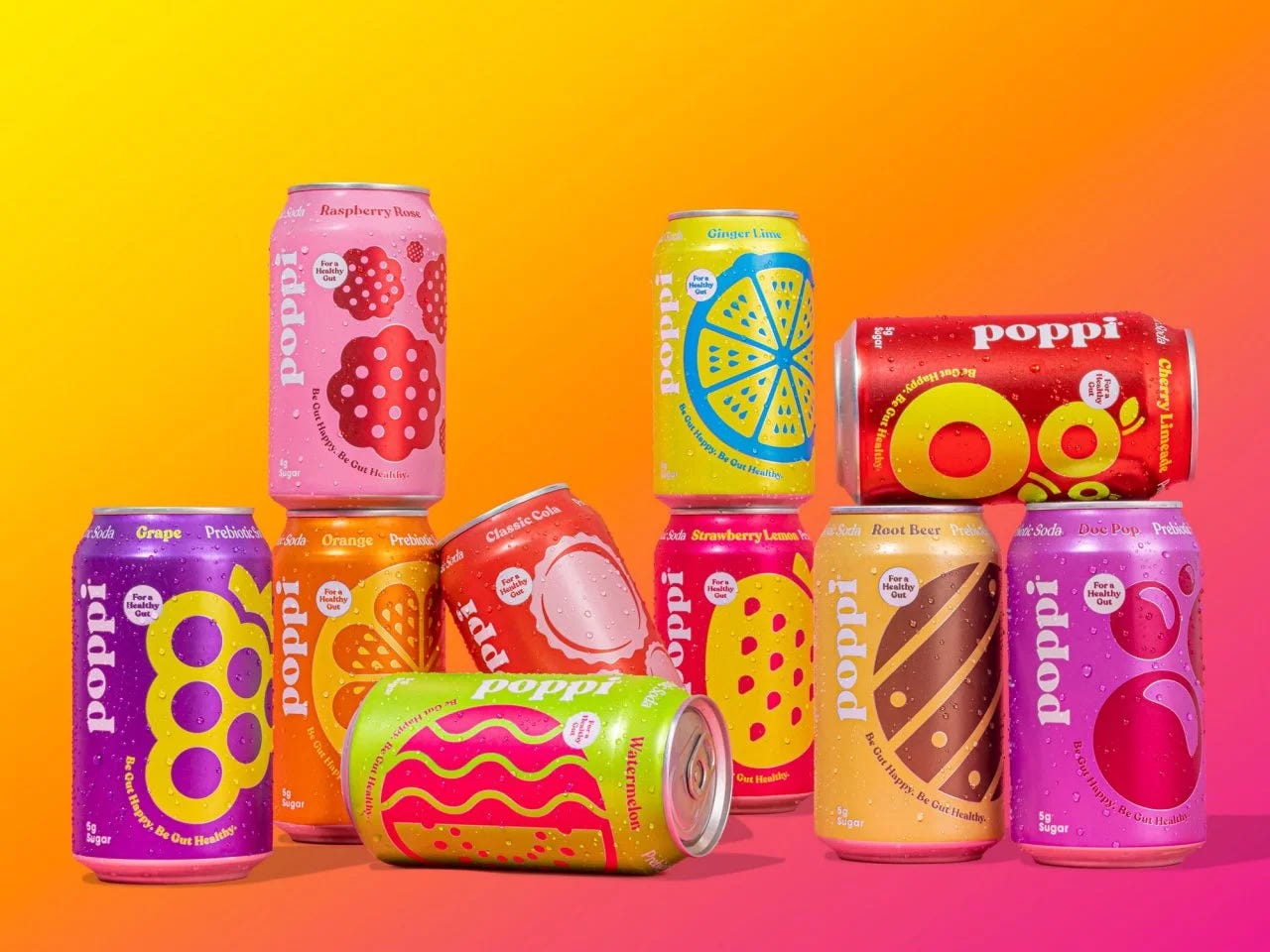
Poppi didn’t invent a new behavior. It walked straight into one of America's most frequent purchases, a can of soda, and offered a version people felt better about drinking.
That choice is the whole business. A product people reach for daily gives you dozens of chances a year to earn a repeat. The viral TikToks and the celebrity fans only mattered because the next can got bought too. When PepsiCo closed its acquisition in May 2025 for $1.95 billion, it wasn’t paying for a moment. It was paying for a habit that had already proven itself on shelves.
The lesson: the strongest consumer brands rarely create demand from nothing. They find a habit people already have and make it more desirable.
What to watch: repeat rate by cohort, units per customer per month, retail velocity (units sold per store per week), margin after retailer fees and promotions.
Rhode: Attention Is Not the Business

Hailey Bieber can make millions of people look at a lip treatment. That’s real leverage: it makes customers cheaper to acquire. But attention only gets you the first order. The question every celebrity brand eventually faces is whether the product keeps selling once the novelty wears off.
Rhode’s answer showed up in two places. First, on the shelf: e.l.f. called its Sephora North America debut record-breaking. Second, in the numbers after the hype. On e.l.f.’s Q4 fiscal 2026 call (fiscal year April 2025 to March 2026), the company said Rhode did roughly $390 million in net sales, up more than 80%, and over $500 million in global retail sales on an annualized basis.
Notice those are two different numbers. Retail sales is what shoppers paid at the register. Net sales is what the brand actually received after retailers took their cut. Learning to ask which one you’re looking at is half of reading any headline.
The lesson: celebrity lowers the cost of the first sale. Product quality and replenishment decide every sale after that.
What to watch: hero-product sell-through, time between repurchases, sales per store per week, share of revenue from returning shoppers.
Thrive Causemetics: The Money Is in the Second Order
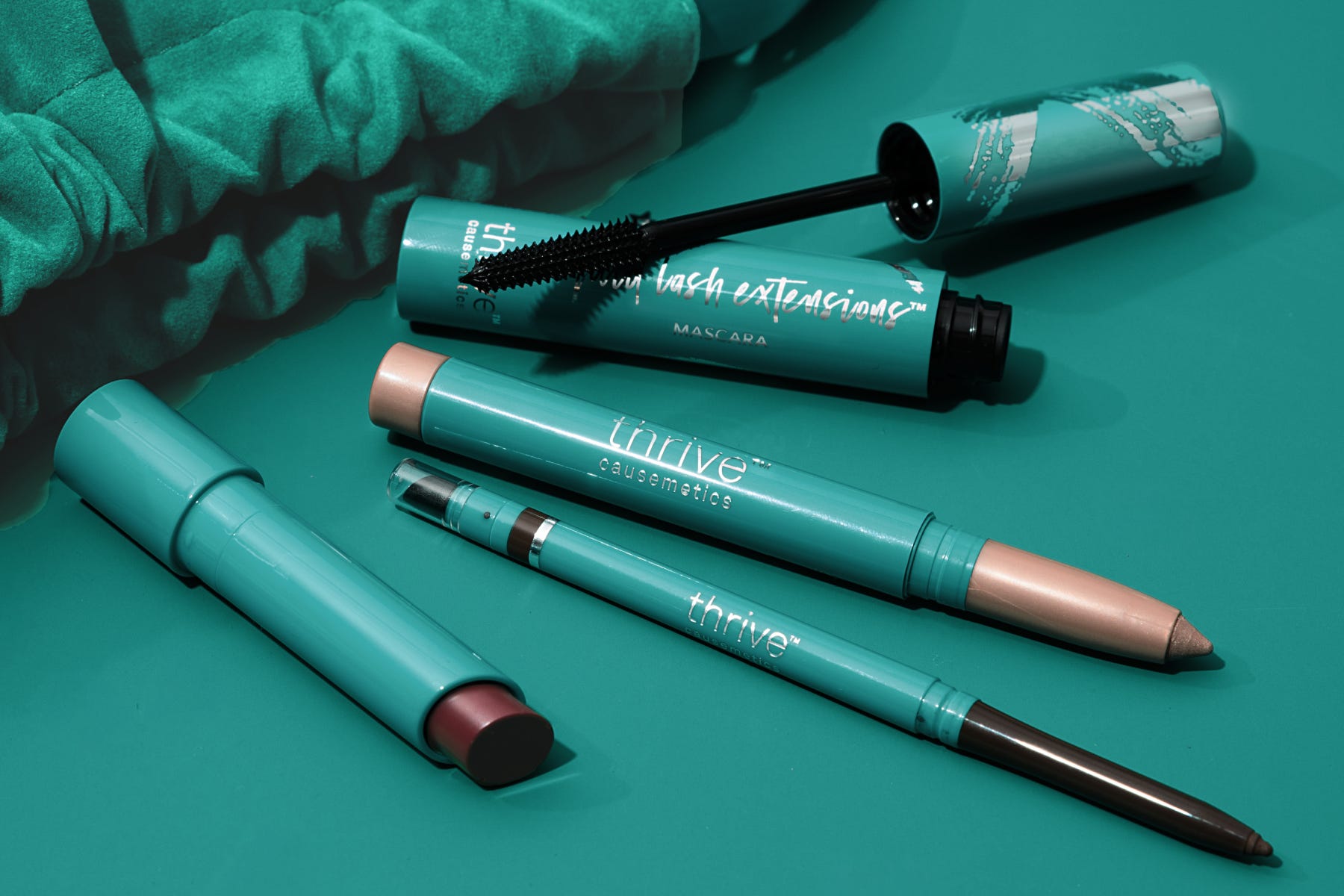
Karissa Bodnar built Thrive around hero products that solve a specific problem, sold mostly direct to the customer. When you sell direct, you own the relationship: the email address, the purchase history, the chance to suggest what comes next.
That changes how you think about the first sale. A mascara bought through an ad might barely break even. Its real job is to start a relationship. The profit lives in the second order, the third, and the brow gel and eyeliner that join the routine later.
The lesson: one hero product can be your acquisition engine. The economics are decided by what happens after the first purchase.
What to watch: first-to-second-order conversion, days until the second order, order size from bundles and cross-sells, share of revenue from email and SMS, how many months it takes to earn back what you spent acquiring a customer (CAC payback).
Costco: The Renewal Is the Product
Most people think Costco sells groceries. But it sells a yearly decision: is this membership still worth it?
The flywheel runs like this. Membership fees help fund rock-bottom prices. Low prices pull members in more often. More traffic gives Costco leverage with suppliers, which keeps prices low, which makes renewing an easy call. The visible metric is sales. The one that proves the model is renewal.
In its fiscal Q4 2026 results (the quarter ending August 30, 2026), Costco reported a 92.3% renewal rate in the US and Canada and 89.8% worldwide, across 150.4 million cardholders. Analysts watch that number closely, and even a slip of a few tenths of a point makes headlines. That metric is their real business.
The lesson: find the number that proves customers are choosing to stay, not the one that just reports activity.
What to watch: renewal rate, comparable-store sales, sales per member, membership-fee income, inventory turns.
Netflix: Watch What a Company Stops Telling You

For a subscription business, the real question isn’t how many people signed up. It’s whether they keep finding enough value to stay. Someone who watches every week rarely cancels. Lower churn makes every dollar spent on content and marketing work harder. Engagement is the leading indicator; retention is the payoff.
Netflix made this point. Beginning in 2025, it stopped reporting quarterly subscriber numbers, calling engagement its best proxy for customer satisfaction. Then in July 2026, it said it would publish engagement reports only once a year starting in 2027, focusing on revenue and operating profit instead.
Companies highlight the metrics that provide value to them and quietly retire the ones that don’t. When a number disappears, ask why. Mature businesses often shift to profit metrics as growth slows, and that shift can be healthy.
The lesson: in subscriptions, engagement predicts retention. And for any company, what it chooses to disclose is data too.
What to watch: churn, time spent per user, ad-tier adoption, revenue per member, engagement per dollar of content spend.
The Cheat Sheet: Vanity vs. Business Metrics
Next time a brand’s success crosses your feed, swap the number on the left for the question on the right.
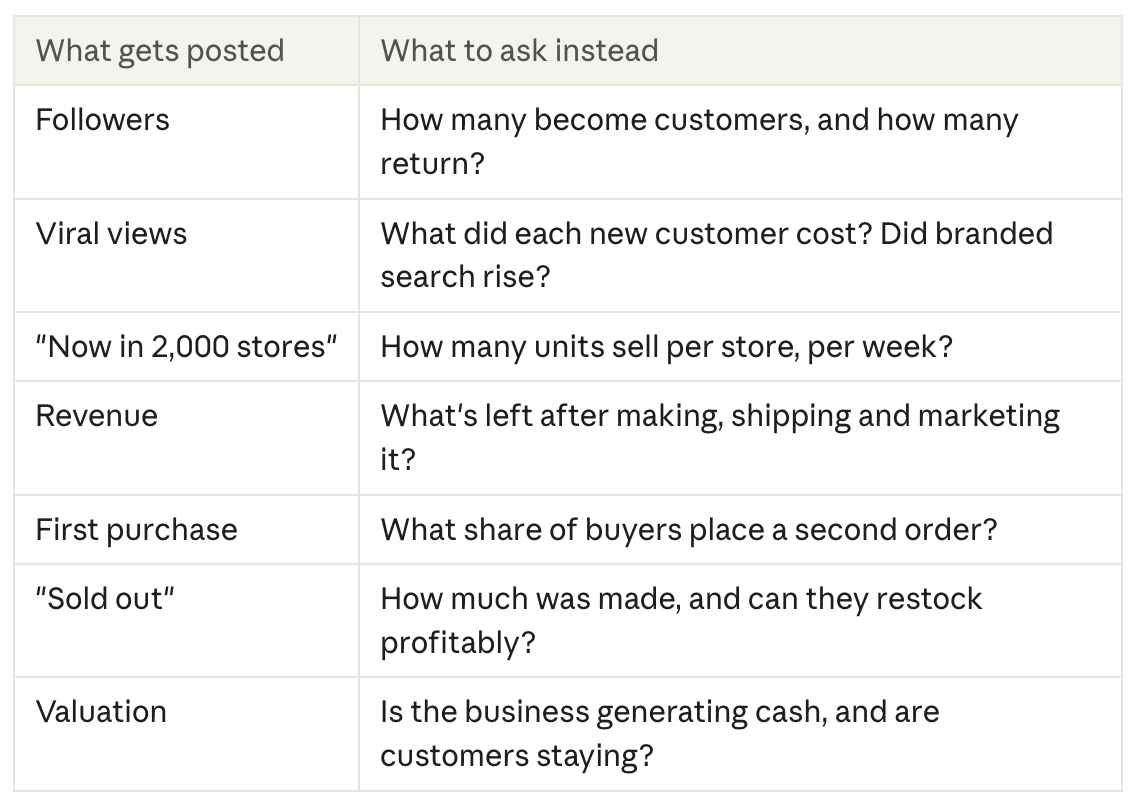
“Sold out” deserves a special note. It can mean overwhelming demand. It can also mean a cautious production run. The proof is whether the product keeps selling after the restock, at a healthy margin.
What Actually Compounds
The five questions explain every business in this piece. Use them on any company you’re studying, including your own:
What job does the product do? What habit, frustration, or desire is it replacing?
What proves customers care? Repeat orders, renewals, sell-through, people searching for you by name.
What makes growth affordable? Margin, order size, lifetime value, and how fast you earn back acquisition costs.
What makes it repeatable? A channel you can keep pouring into: direct, Amazon, retail, wholesale, subscription.
What could break it? Rising ad costs, weak repeat, discount dependence, one retailer holding too much power, or a business that only works while the founder is posting.
None of these answers show up in a launch-day screenshot. They show up months later, in the quiet data. Which is exactly why the early, unglamorous stretch counts so much: it’s when repeat customers and real margins are actually built.
Your Move
If your launch didn’t sell out, you’re not behind. If you have fifty customers and twenty of them came back, you may have something many viral brands never find: proof the product works.
Revenue tells you people bought it. Retention tells you they actually want it. Margin tells you whether the business deserves to survive.
Be Bold. Be Real. Be Anomalous.
Sources
Follow for more Be Anomalous stories, conversations, and behind-the-scenes.
Website | Instagram | LinkedIn | YouTube | @iamsaimenon