


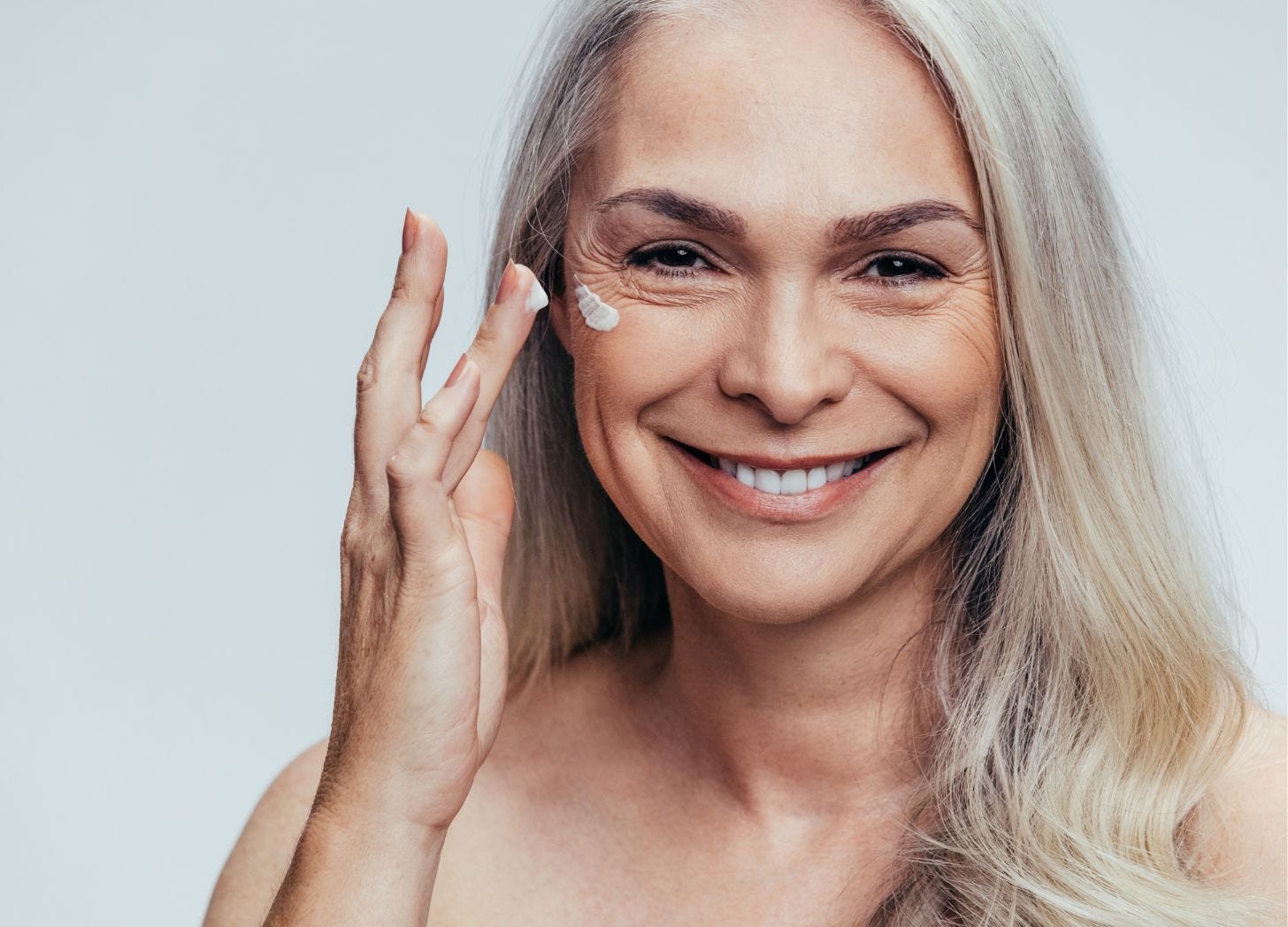
Your skin is your body’s largest organ, and like everything else, it evolves over the course of your lifetime. From the plump, dewy skin of youth to the distinguished character lines of older age, these changes are a natural part of life — though understanding them can help you care for your skin at every stage.
The Science Behind Aging Skin
Skin aging happens through two distinct processes. Intrinsic aging is driven by genetics and the natural passage of time, while Extrinsic aging is caused by environmental factors like sun exposure, pollution, smoking, and diet.
Both work together to shape how your skin looks and feels over the decades.
At the cellular level, the skin’s ability to renew itself gradually slows. Young skin turns over new cells roughly every 28 days; by the time you reach your 50s and 60s, that cycle can take twice as long. This slowdown affects everything from texture and tone to the skin’s ability to heal.
Your 20s: The Beginning of Change
Most people think of their 20s as the peak of their skin’s health — and in many ways, they’re right. Collagen production is still robust, skin snaps back quickly, and the complexion tends to be bright and even. But this is also when the earliest changes begin. Collagen levels start declining at a rate of about 1% per year after the age of 20. Sun damage accumulated during childhood and teenage years also starts to quietly accumulate beneath the surface, laying the groundwork for changes that will appear later.
Your 30s: Subtle Shifts
By the 30s, changes become more noticeable. Fine lines may appear around the eyes (crow’s feet) and between the brows, largely as a result of repeated facial expressions. Skin may start to look slightly less luminous as cell turnover slows, and some people begin to notice uneven pigmentation or the first signs of sun spots. The skin’s fat content begins to diminish, causing a very subtle loss of volume in the face.
Your 40s: Visible Transformation
The 40s are when many people feel their skin has visibly shifted. Collagen and elastin — the proteins responsible for skin’s firmness and elasticity — continue their decline, leading to deeper lines, sagging around the jawline, and a change in overall skin texture. The skin produces less oil, meaning dryness becomes more common. Pores may also appear larger as skin loses its tightness. For women, the hormonal shifts of perimenopause can accelerate these changes, often causing increased dryness and sensitivity.
Your 50s and 60s: Structural Change
In the 50s and 60s, the structural changes to the skin became more pronounced. The fat pads beneath the skin — which provide the rounded contours of a youthful face — begin to shrink and shift downward, contributing to hollowing around the eyes, temples, and cheeks. Wrinkles deepen. The skin may begin to feel thinner and more fragile, and it bruises and heals more slowly. Age spots (also called liver spots) become more common, caused by decades of UV exposure, triggering excess melanin production.
Menopause in women causes a significant drop in estrogen, which plays a major role in maintaining skin thickness and moisture. Studies suggest that skin can lose up to 30% of its collagen in the first five years after menopause.
Your 70s and Beyond: Thin and Delicate Skin
In the later decades of life, the skin becomes noticeably thinner and more transparent. Blood vessels are more visible. The skin’s ability to retain moisture diminishes further, making dryness, flaking, and itching more prevalent. Because sweat and oil glands become less active, the skin also loses some of its natural protective barrier. Wounds and cuts take longer to heal, and the risk of skin infections increases.
Despite all this, many people find a kind of beauty in aged skin — the lines and marks that map a life fully lived.
What You Can Do
While you can’t stop the clock, you can meaningfully influence how your skin ages. A few evidence-backed strategies stand out.
Sun protection is the single most effective anti-aging measure available. UV radiation accelerates collagen breakdown, causes pigmentation, and raises the risk of skin cancer. Daily broad-spectrum SPF 30+ sunscreen is non-negotiable at any age.
Moisturizing helps compensate for the skin’s declining ability to retain water. Look for ingredients like hyaluronic acid, ceramides, and glycerin, which help draw and lock in moisture.
Retinoids (derivatives of vitamin A) are among the most well-studied skincare ingredients for aging. They stimulate collagen production, speed up cell turnover, and can reduce the appearance of fine lines and age spots over time.
Diet and lifestyle matter enormously. A diet rich in antioxidants — found in fruits, vegetables, and healthy fats — helps combat oxidative stress, one of the key drivers of skin aging. Staying hydrated, sleeping well, managing stress, and avoiding smoking all make a measurable difference.
Final Thought
Aging skin isn’t a problem to be solved so much as a process to be understood and worked with. The goal isn’t to look like you’re 25 forever — it’s to have skin that’s healthy, comfortable, and cared for at every age. With the right knowledge and habits, you can support your skin through every decade of life.
New Skin Deep drops every Wednesday.
Be Bold. Be Real. Be Anomalous.