


Why Webvan died, and Instacart won. Why Pets.com collapsed, and Chewy thrived. And how to use this week’s guest Paul Orlando’s “Why Now” framework on whatever you’re building.
In 2013, Michael Moritz of Sequoia Capital put $8 million into a year-old grocery delivery startup called Instacart and took a seat on its board.
If you knew Moritz’s history, this was a strange bet. Sequoia had been one of the backers of Webvan, the online grocer that raised hundreds of millions, went public in 1999, and was gone by the summer of 2001. When Bloomberg asked him about the new investment, Moritz joked that his firm had still been in “outpatient therapy for our Webvan fiasco.”
Same investor and Same idea: groceries, ordered online, brought to your door. Twelve years apart.
One became the most expensive cautionary tale of the dot-com era. The other went public in 2023 at a $9.9 billion valuation.
The usual explanation is that Instacart executed better. That’s true, but it skips the more interesting question:
Why now?
Under the Hood is where we take apart the companies and founders behind the headlines the decisions, the numbers, and the years nobody saw. If you’re building through the hard middle, subscribe. This one’s for you.
The Lens: Paul Orlando’s Two Questions
Paul Orlando has built and run four startup accelerators around the world. He teaches entrepreneurship at USC and directs its startup incubator. After watching thousands of teams, he kept seeing the same thing: some founders worked brutally hard and still failed, while others seemed to work a little less and won anyway. Often, the difference was timing. He wrote the book on it: Why Now: How Good Timing Makes Great Products.
"Somebody came along later doing pretty much the same thing. And it wasn't that the management style was radically different. It was: the business model didn't support it back when we were doing it, and it does support businesses doing it now." — Paul Orlando, on Be Anomalous
His framework boils down to two questions. We’ll run both companies in each pair through them.
Question 1: What has changed in the world that makes this possible now? Paul tracks twelve forces he calls timing drivers: technology, social and behavioral shifts, regulation, installed base (existing products you can ride on), economics, networks, distribution, access to capital, organizational models, available talent, demographics, and crisis. No single driver makes a company. Winners usually sit where several converge.
Question 2: Do those changes actually fix the business model? This is the part most founders skip. A trend only matters if it changes your unit economics, what it costs to acquire, serve, and keep a customer. A real need served at a loss is still a loss, no matter how good the timing looks.
Case Study 1: Webvan vs. Instacart
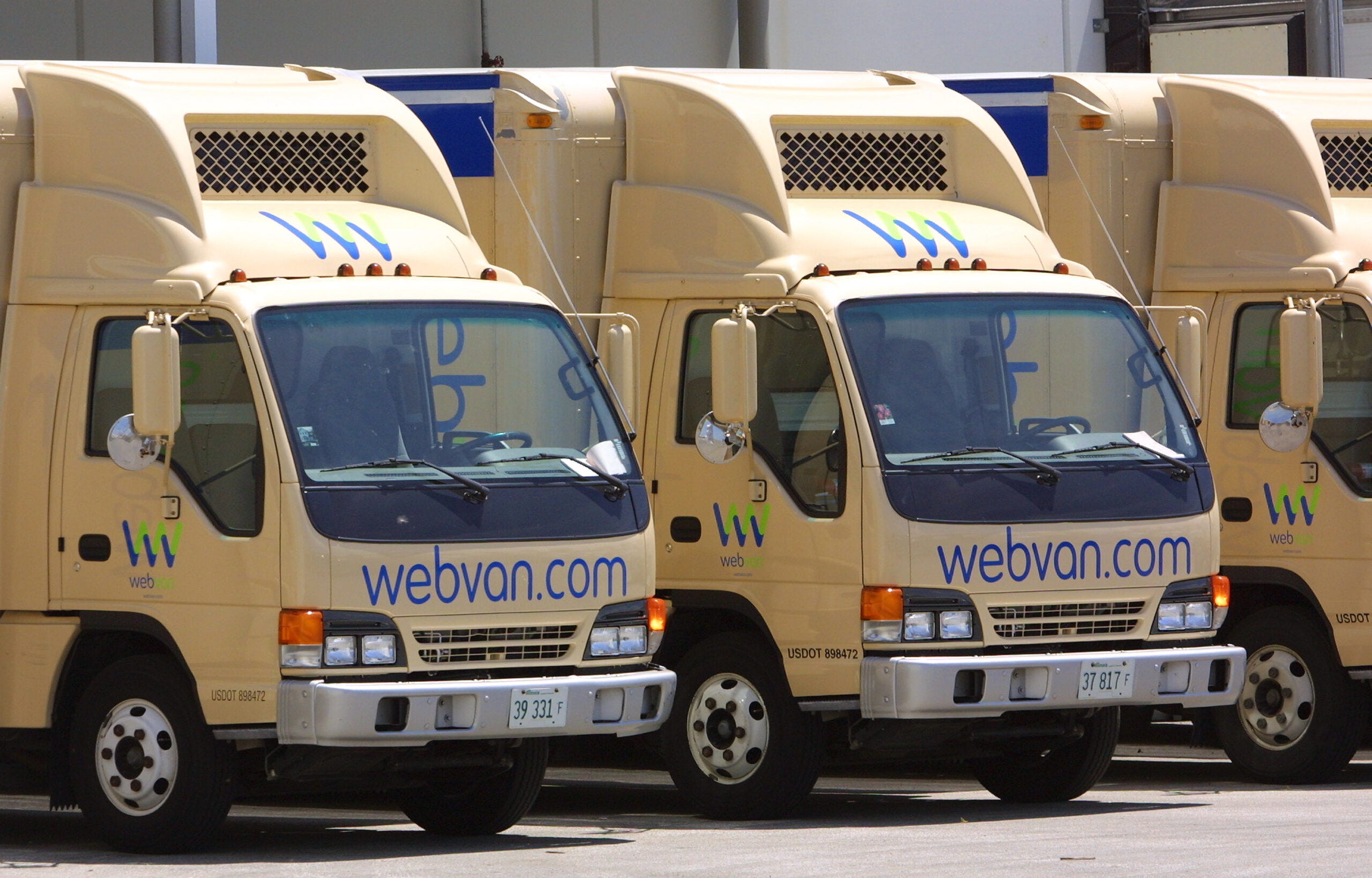
The idea
Order groceries online. Get them delivered to your door. Identical promise, twelve years apart.
Why Webvan failed
Webvan was founded in 1996 by Louis Borders, who had co-founded Borders Books. It had blue-chip investors, and the customers who used it genuinely loved it. It did not fail because people didn’t want it.
It failed because it had to build the entire system itself, before demand existed to pay for it.
Webvan started taking orders in the Bay Area in June 1999. Five weeks later, with roughly 10,000 customers, it placed a $1 billion order with Bechtel to build automated warehouses in 26 markets. Each hub cost around $30 million. Borders said he wanted Webvan in every metro area big enough to have a major league sports team. That November, it raised $375 million in its IPO. It bought a fleet of trucks. It bought its money-losing rival HomeGrocer for $1.2 billion in stock.
Every warehouse, every truck, every driver was a fixed cost Webvan carried before it knew whether customers would come in enough volume. They didn’t. In July 2001, Webvan filed for bankruptcy, laid off 2,000 people, and left more than $800 million in losses behind.
Why Instacart won
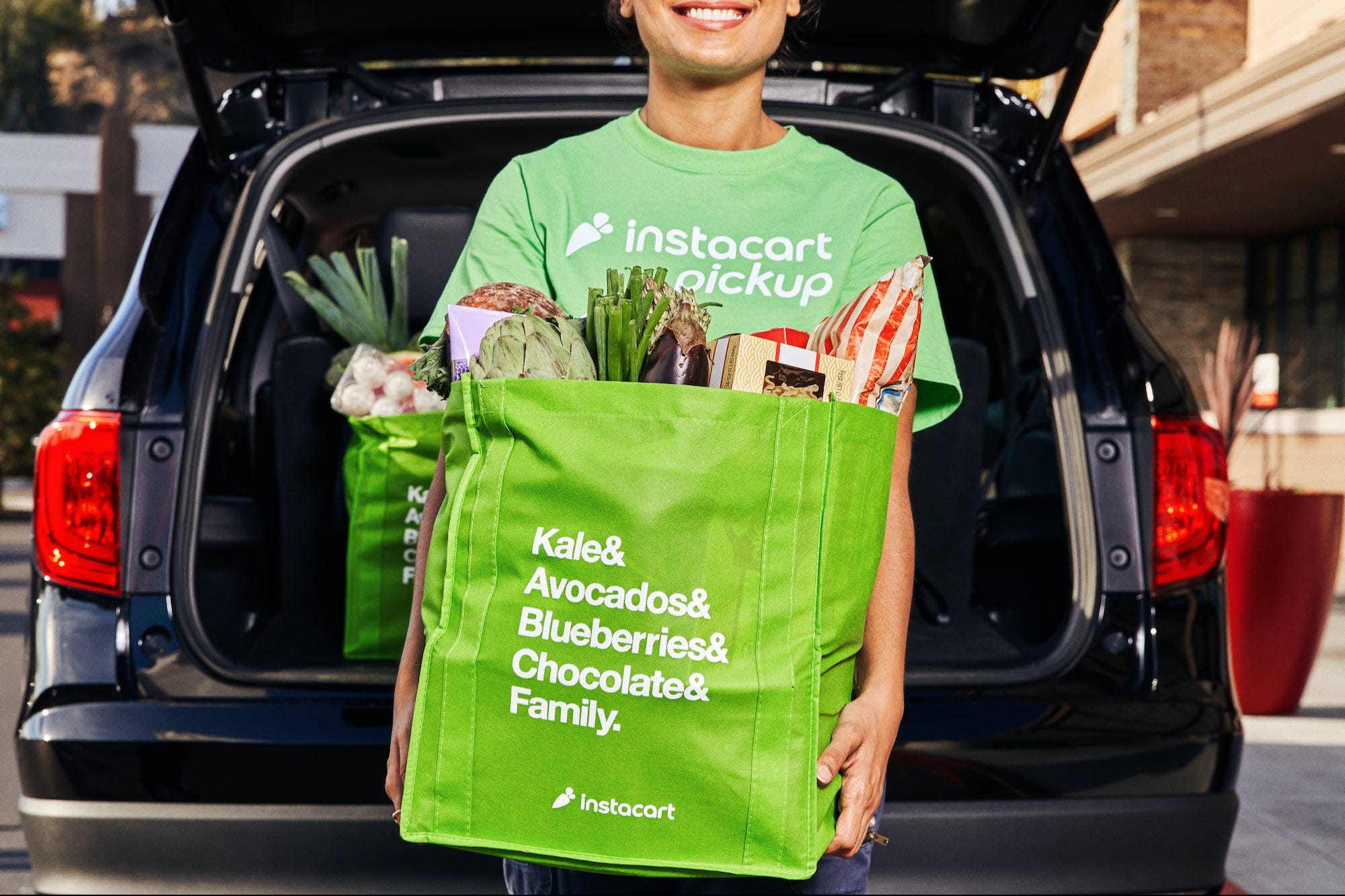
Apoorva Mehta launched Instacart in mid-2012 and went through Y Combinator that summer. He wasn’t a first-timer: by his own account he’d tried around twenty companies that didn’t work, and before that he’d been a supply chain engineer at Amazon working on fulfillment. He knew exactly what had killed Webvan, and he designed the opposite.
Instead of building warehouses, Instacart treated existing supermarkets- Safeway, Whole Foods, Trader Joe’s, Costco as its warehouses. Instead of buying trucks, it dispatched independent shoppers in their own cars. Its core asset wasn’t concrete; it was software that batched orders, mapped store aisles, and routed shoppers.
The result: Instacart could open in a new city without building anything. No warehouse, no fleet, no inventory risk.
Then the crisis driver hit. When the pandemic arrived in 2020, grocery delivery became a necessity overnight. Instacart brought on 300,000 new shoppers in the weeks after March 2020, and by October its private valuation had reached roughly $17.7 billion. In September 2023, it went public at a $9.9 billion valuation, raising $660 million.
The timing scorecard: 1999 vs. 2012
Installed base
1999: Nothing to ride on. Webvan had to build its own warehouses and buy its own trucks.
2012: The iPhone was five years old. Customers ordered from their pockets, shoppers were routed through theirs, and thousands of stocked supermarkets served as ready-made warehouses.
Organizational model
1999: Delivery meant hiring and managing a full workforce.
2012: On-demand contractor work had become a recognizable model.
Available talent and economics
1999: A tight boom-era labor market.
2012: The Great Recession had left a large, flexible labor pool looking for hours.
Social and behavioral
1999: Online shopping was still a novelty for most households.
2012: A decade of e-commerce had made buying from someone you’d never meet feel normal.
Capital access
1999: Bubble-era money let Webvan commit a billion dollars before proving its model.
2012: Post-crash investors, including the ones who’d lost money on Webvan, wanted capital efficiency.
Crisis
2001: The dot-com crash cut off the funding Webvan depended on.
2020: The pandemic turned Instacart from a convenience into infrastructure.
The verdict
Run it through Paul’s two questions. Question 1: almost every driver Webvan lacked was present for Instacart. Question 2: those drivers didn’t just make delivery possible; they collapsed the cost of entering a market from hundreds of millions of dollars to almost nothing.
Webvan wasn’t wrong about the future. It was wrong about when the future would be cheap enough to afford.
Case Study 2: Pets.com vs. Chewy
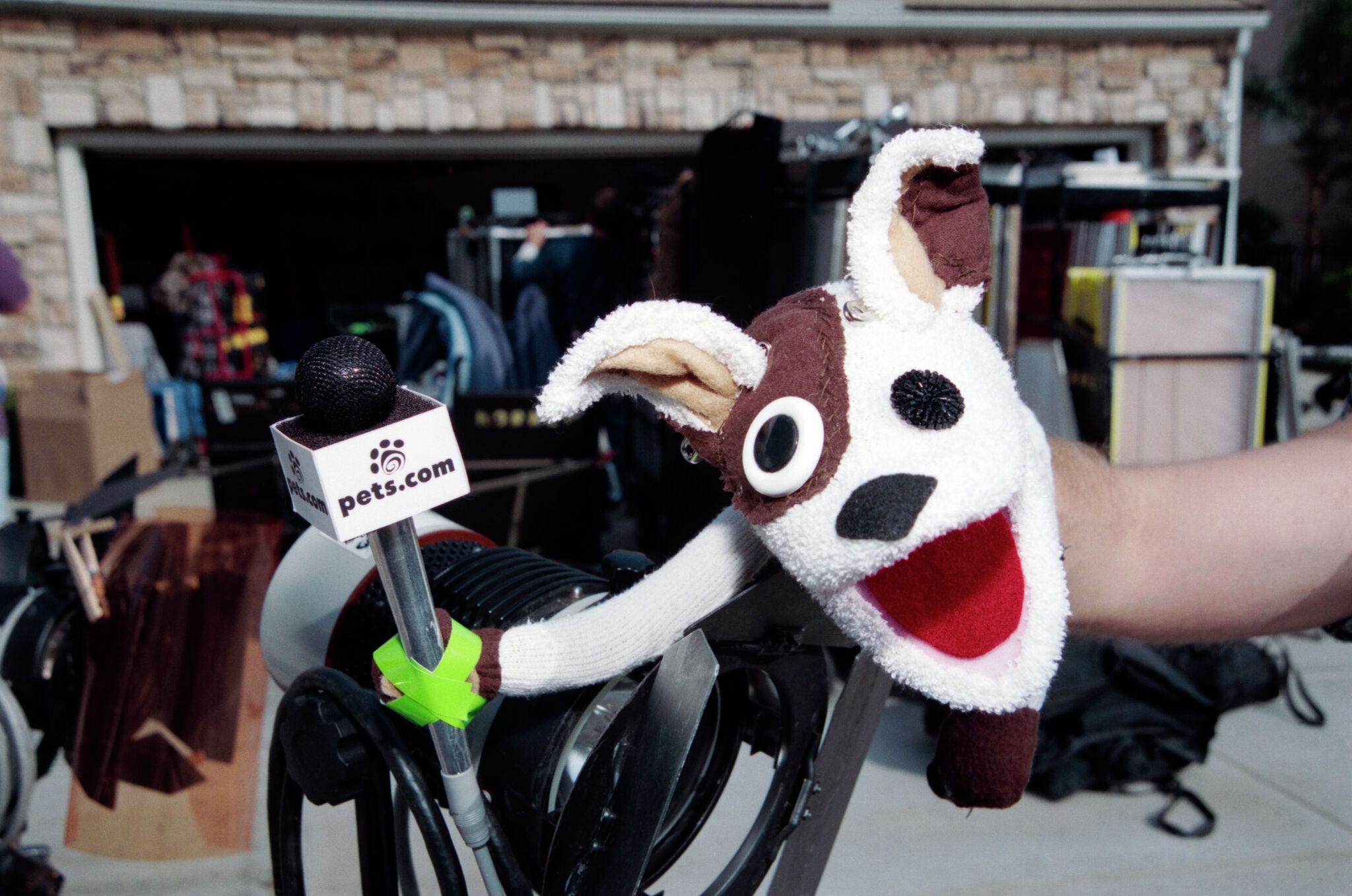
The idea
Sell pet food and supplies online. Ship them to the door. Identical promise, thirteen years apart.
Why Pets.com failed
Pets.com launched in November 1998. Amazon took a major stake in its first funding round. Its sock puppet mascot became a genuine celebrity, with a balloon in the 1999 Macy’s Thanksgiving Day Parade and a national Super Bowl ad in January 2000. That February, Pets.com went public and raised $82.5 million.
Two hundred and sixty-eight days later, it was shutting down.
The demand was real: pet owners wanted someone else to haul the dog food. The problem was what it cost to haul it. Pets.com was shipping heavy, bulky, low-margin goods like fifty-pound bags of kibble, often below cost, with free shipping to win customers. Every order dug the hole deeper. In the first nine months of 2000, it lost $147 million. By November it had closed, and about 300 people were out of work.
This is Paul’s clearest example of failing Question 2. The value proposition was sound. The cost structure was impossible. And no amount of brand awareness fixes an order that loses money every time it ships.
Why Chewy won
Ryan Cohen was 25 when he started Chewy in 2011 with Michael Day. It wasn’t their first idea. The pair had put $150,000 of their own money into an online jewelry business, realized at a trade show they had no passion for it, sold the inventory for 80 cents on the dollar, and started buying pet supplies from distributors with what was left.
Chewy faced the exact question that killed Pets.com: how do you profitably ship a fifty-pound bag of dog food?
Its answer was Autoship. Pets don’t stop eating, so pet food is one of the most predictable purchases a household makes. Chewy built around that: customers sign up once, and the food arrives on schedule. That one design choice rewires the unit economics:
Acquisition: You win the customer once instead of paying to win them back every month.
Inventory: Recurring orders make demand forecastable, so stock runs leaner.
Fulfillment: Shipments can be planned rather than improvised.
Retention: Round-the-clock customer service that treated pet owners like family built the loyalty Pets.com tried to buy with Super Bowl ads.
It worked. Chewy hit nearly $900 million in revenue within five years. In 2017, PetSmart bought it for $3.35 billion, the largest e-commerce acquisition at the time. In 2019, it went public at roughly $8.7 billion. In its most recent fiscal year, Chewy reported $12.6 billion in net sales across 21.3 million active customers, with $10.5 billion of that coming from Autoship customers, roughly five of every six dollars.
The timing scorecard: 2000 vs. 2011
Social and behavioral
2000: Buying online was new and untrusted for most people.
2011: Online shopping was routine, and Amazon Prime had spent years teaching customers to expect a box on the doorstep.
Distribution
2000: Shipping heavy goods nationally was slow and expensive.
2011: National parcel networks were faster, denser, and more efficient.
Technology
2000: E-commerce infrastructure was expensive and had to be built at bubble-era prices.
2011: That infrastructure was cheap and standard.
Capital access
2000: Easy money funded growth and advertising without a path to profit, then disappeared overnight.
2011: Post-crash investors demanded a business that could stand on its own math.
Business model
2000: One-off orders, free shipping, prices below cost.
2011: Recurring orders that made every customer more valuable over time.
The verdict
On Question 1, Chewy had real tailwinds Pets.com never had. But this case is mostly about Question 2. The drivers made online pet supplies easier by 2011; they didn’t automatically make it profitable. Chewy still had to design a model: Autoship, which turned the heavy, boring repeat purchase that killed Pets.com into its greatest asset.
What Actually Compounds
The comforting reading of these four companies is that timing is luck. Paul’s work says the opposite: timing can be studied, tested, and designed for.
An idea that “already failed” might just have been early. Grocery delivery wasn’t a bad idea in 1999. Online pet supplies weren’t a bad idea in 2000. They were good ideas waiting for the world to catch up, and for the right founders, shaped by years nobody saw, to be ready when it did.
Be Bold. Be Real. Be Anomalous.
Follow for more Be Anomalous stories, conversations, and behind-the-scenes.
Website | Instagram | LinkedIn | YouTube | @iamsaimenon