


If you’ve grabbed a Starbucks while shopping at Target, browsed makeup at Sephora inside Kohl’s, or visited Ulta Beauty’s mini-store inside Target, you’ve experienced one of retail’s most lucrative business models. These aren’t random convenience arrangements; they’re carefully structured partnerships generating billions of dollars annually, reshaping how we shop, and sometimes spectacularly failing.
What Is a Shop-in-Shop Partnership?
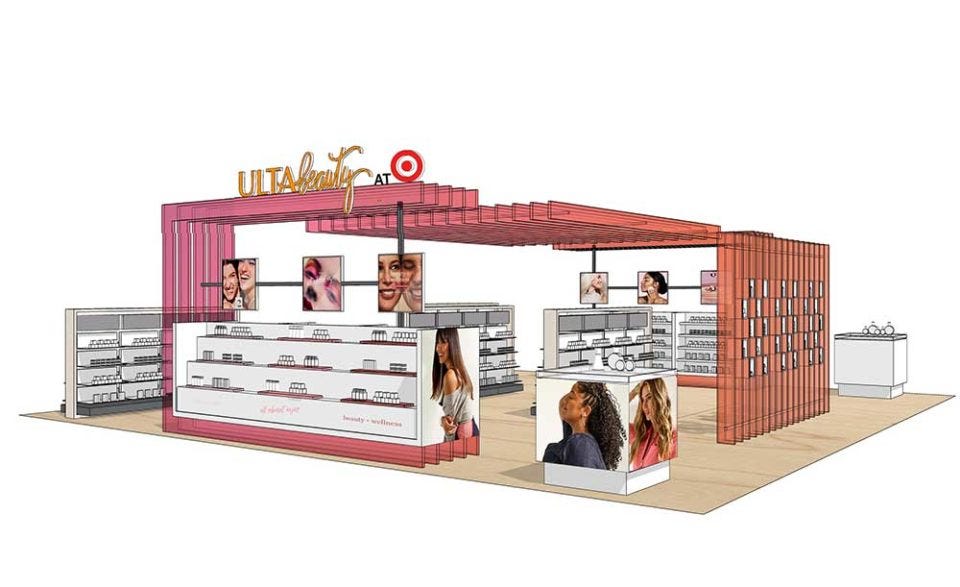
The concept is simple: a brand operates a dedicated space inside another retailer’s store. Known in the industry as “shop-in-shop,” “store-within-a-store,” or “concessions,” these arrangements allow brands like Starbucks, Ulta, and Sephora to expand their reach while host retailers like Target, Kohl’s, and Safeway transform their stores into multi-brand destinations.
But beneath this simple premise lie three distinct business models, each with different risk profiles, control structures, and financial arrangements.
The Three Business Models: Who Controls What and Who Gets Paid
Model 1: Licensed Operations (The Franchise Model)
Example: Starbucks at Target
Think of this like a McDonald’s franchise. Target pays Starbucks for the right to use the Starbucks name, recipes, and brand standards. Target employees work behind the counter, Target buys supplies from Starbucks at wholesale prices, and Target keeps most of the revenue from selling drinks, minus royalty fees paid to Starbucks.
Who controls what:
Target employees staff the counter
Target owns and manages inventory
Starbucks sets quality standards and provides training materials
Starbucks has minimal day-to-day operational control
How money flows:
The customer pays Target $5 for a latte
Target keeps most of the revenue (perhaps $4.50)
Target pays Starbucks a royalty fee (maybe $0.50 or a percentage)
Target also buys supplies from Starbucks at wholesale prices
Who takes the risk: Target bears all operational risk. If sales are poor, Target loses money. Starbucks earns royalties and wholesale revenue regardless.
Model 2: Joint Venture Partnership (The 50/50 Model)
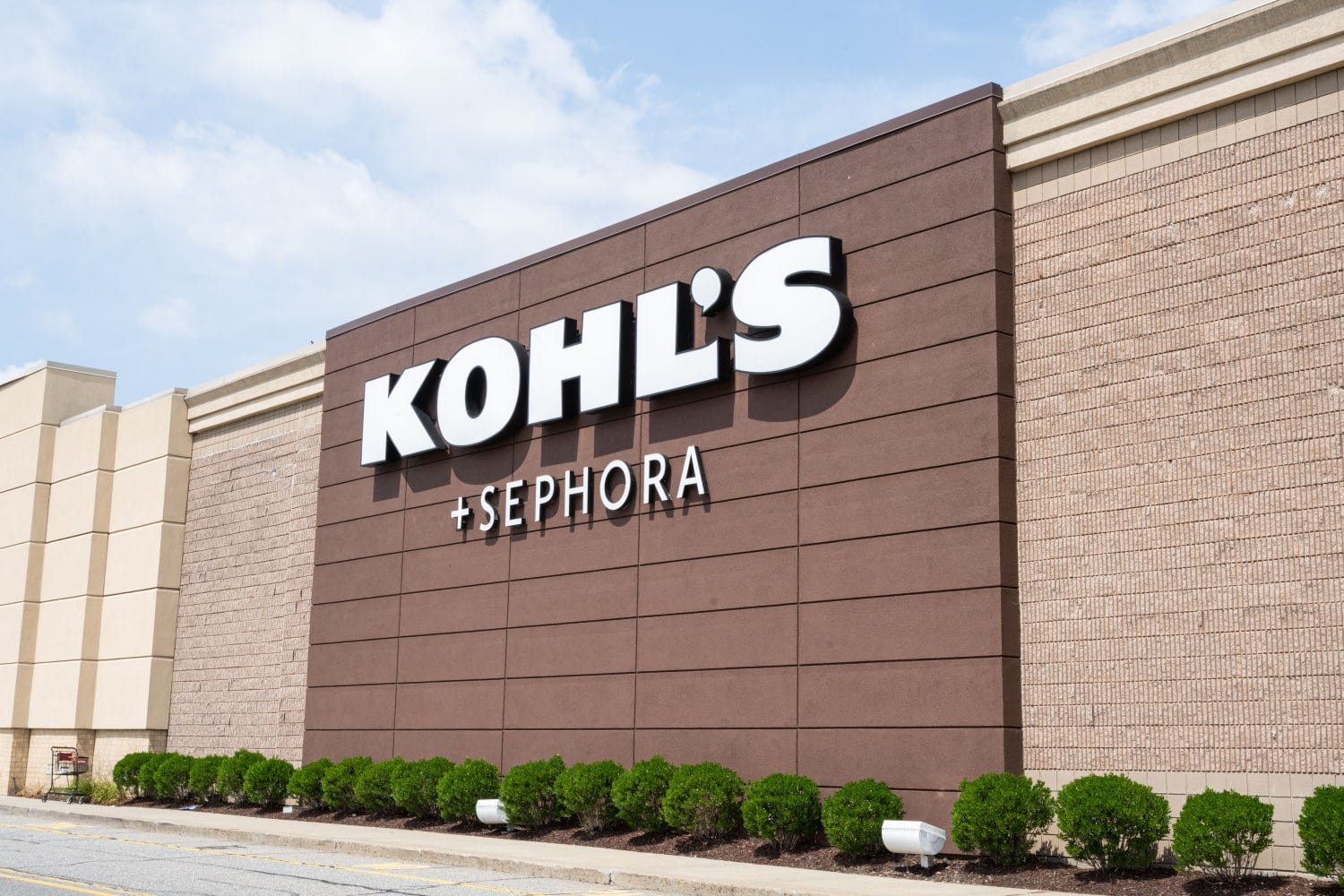
Example: Sephora at Kohl’s
This is the most balanced arrangement where both companies share control, investment, and profits equally. It’s neither pure licensing nor pure leasing; it’s a true partnership.
Who controls what:
Kohl’s employees staff the beauty counters (but Sephora trains them)
Sephora owns and manages the inventory
Sephora curates which brands and products are sold
Sephora designs the shop layout and brand experience
Kohl’s funds the physical buildout of the spaces
Kohl’s processes the sales transactions
How money flows:
The customer pays Kohl’s $50 for makeup
Kohl’s recognizes the sale revenue
After deducting ALL expenses (inventory costs, employee wages, operations, depreciation), both companies split the operating profit 50/50
Who takes the risk: Both companies share it equally. They both win when sales are strong, and both lose when they’re weak. This alignment of incentives is a key reason this model has been so successful.
Model 3: Leased Space (The Landlord Model)
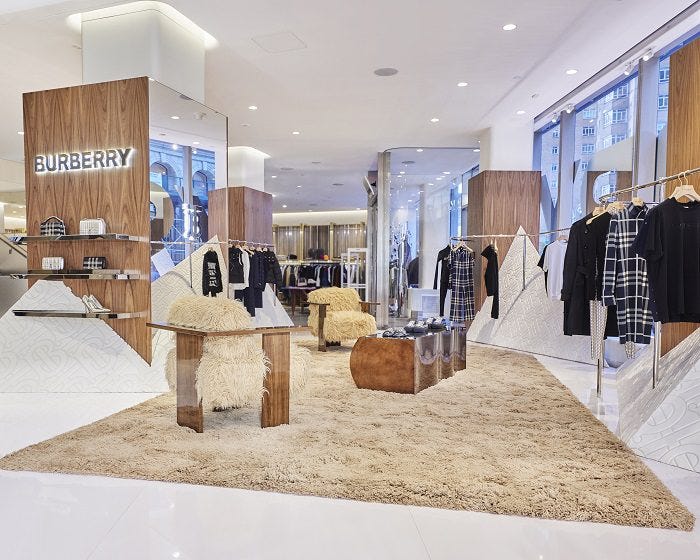
Example: Burberry at Nordstrom
This works like renting a kiosk in a mall. The brand leases space from the host retailer but operates completely independently. This model is extremely common in luxury department stores and UK retail, though less visible in everyday American shopping.
How money flows (pure lease version):
The customer pays the brand $30 for a product
The brand keeps all $30 in revenue
The brand pays the host fixed rent (perhaps $10,000/month)
Rent is due regardless of sales performance
Who takes the risk: The brand takes most or all of the risk. In pure lease arrangements, they must pay rent even if sales are terrible. In revenue-sharing versions, the risk is slightly more balanced, but the brand still manages all operations and inventory.
Note: The dollar amounts in these examples are illustrative to show how money flows—actual figures vary by contract and aren’t publicly disclosed.
Why These Partnerships Exist: The Economics
These partnerships solve real problems for both parties while creating value for customers.
For the brand (Ulta, Sephora, Starbucks):
Rapid expansion without crushing real estate costs
Instant access to millions of new customers
Shared operating expenses (heating, security, parking)
Lower financial risk than opening standalone stores (especially in licensed and partnership models)
For the host retailer (Target, Kohl’s, Safeway):
Increased foot traffic from customers seeking the partner brand
Revenue from royalties, profit-sharing, or rent
The ability to offer premium brands without developing expertise
Enhanced reputation as a shopping destination
For customers:
Convenience of one-stop shopping
Often better quality than if the host managed that category themselves
The Billion-Dollar Success Stories
Sephora at Kohl’s: The Gold Standard
When Sephora ended its 15-year relationship with JCPenney in 2020 and partnered with Kohl’s instead, industry observers wondered if it would work. The answer came quickly and decisively.
By 2023, Sephora at Kohl’s was generating $1.4 billion in sales with projections to exceed $2 billion by 2025. The partnership showed more than 90% year-over-year sales growth and now represents over 10% of Kohl’s total net sales. When Kohl’s completed the nationwide rollout in early 2025, its stock surged 21% in premarket trading.
Why the joint venture model worked:
The 50/50 profit-sharing structure aligned both companies’ interests perfectly. Kohl’s had every incentive to drive traffic and provide excellent service because it earned half the profits. Sephora maintained enough control over inventory, brand selection, and training to ensure quality standards.
Geographically, the partnership was brilliant. Kohl’s operates primarily in suburban strip malls and standalone locations, while Sephora’s existing stores are concentrated in upscale malls and urban areas. The overlap was minimal, meaning Sephora reached genuinely new customers without cannibalizing its own sales.
For Kohl’s, the transformation was dramatic. The struggling retailer found new life as customers who might never have considered shopping there made special trips for Sephora, often buying Kohl’s merchandise while they were there.
Starbucks Licensed Stores: The Quiet Giant
Starbucks has built an empire on the licensing model, with approximately 19,500 licensed locations globally in airports, grocery stores, Target, universities, and bookstores. In 2023, these licensed stores collectively generated $4.5 billion, roughly 19% of Starbucks’ total revenue.
The economics work brilliantly for Starbucks. While company-operated stores generate more revenue per location, licensed stores require virtually zero operational costs or capital investment from Starbucks. The company receives royalty fees and sells products to licensees while the host handles staffing, rent, and daily operations.
The Target-Starbucks partnership exemplifies this model’s stability. The partnership has expanded over the years, adding features like curbside pickup for Starbucks orders at over 1,700 Target locations and exclusive collaborative products like the Frozen Hot Chocolate Peppermint Frappuccino.
Why the licensing model works for Starbucks:
Coffee is relatively simple to execute compared to complex beauty retail. Expectations are lower—customers don’t expect the full “third place” café experience inside a Target. A Starbucks inside Target serves a different purpose: grab-and-go convenience rather than a destination experience.
Cannibalization risk is minimal. Customers who stop for coffee while shopping at Target aren’t necessarily the same customers who’d spend an afternoon working at a standalone Starbucks. The use cases are different enough that both can thrive.
The Spectacular Failures
Sephora and JCPenney: A 15-Year Partnership Ends in Court
For 15 years, Sephora operated in about 600 of JCPenney’s 850 stores. The partnership, which began in 2006, once seemed perfect. But by 2020, it had deteriorated so badly that JCPenney filed a temporary restraining order to prevent Sephora from terminating their agreement, leading to a legal battle during the pandemic.
What went wrong:
The power dynamic had shifted dramatically. When the partnership began, Sephora had just 120 U.S. stores while JCPenney had 1,000, making JCPenney the obvious path for Sephora to achieve national reach. By the partnership’s end, Sephora had grown to 490+ standalone stores and no longer needed JCPenney’s distribution network.
Meanwhile, JCPenney’s overall financial struggles and declining store traffic made it a liability rather than an asset. Customer experiences deteriorated as JCPenney cut costs and store quality declined. Sephora’s brand suffered by association.
When Sephora found a healthier partner in Kohl’s with a better geographic fit and stronger operations, the decision to leave became obvious.
Ulta at Target: The Partnership That Looked Perfect But Wasn’t
When Ulta and Target announced their partnership, it seemed like a match made in retail heaven. Target’s massive foot traffic, combined with Ulta’s beauty expertise, appeared unstoppable. The reality proved more complicated.
The partnership generated approximately $451 million in revenue for Ulta in fiscal 2024, representing about 4% of Ulta’s total revenue. But Ulta’s CEO stated the royalty revenue was well below 1% of their net sales, under $113 million in actual profit to Ulta.
In May 2025, both companies announced the partnership would end in August 2026.
What went wrong:
Cannibalization killed the economics. Research showed that 14.5% of customers who shopped at Target locations with Ulta also visited standalone Ulta stores. The partnership was essentially moving sales around rather than creating new ones. Unlike Sephora at Kohl’s, where geographic separation created genuinely new customers, Ulta and Target had too much overlap.
The hybrid structure created problems. Ulta-Target used an unusual model where Target employees operated the spaces (like licensing), but Ulta received royalty fees rather than full sales revenue (losing control without eliminating risk). This created the worst of both worlds—Target took operational risk, but Ulta didn’t have full control over quality, and Ulta didn’t get the full revenue, but still got blamed for poor customer experiences.
Operational issues compounded the problem. Target locations with Ulta often suffered from understaffing, shoplifting problems, and limited product selection compared to standalone stores. The inconsistent experience failed to meet customer expectations.
When customers can easily visit a full Ulta store nearby and get a better experience, why settle for the Target version? The value proposition wasn’t strong enough.
Conclusion:
As e-commerce pressures traditional retailers, shop-in-shop models offer a way to maximize the value of physical space by transforming stores into multi-brand destinations.
The next time you grab a Starbucks at Target or browse Sephora at Kohl’s, you’re not just shopping conveniently, you’re participating in one of retail’s most sophisticated business models, where billions of dollars flow through carefully orchestrated partnerships designed to benefit everyone involved. When they work, that is.