


A forklift, a fender panel, and a summer internship: three careers that started within two years of each other, and what forty years of earning the next rung actually builds.
The most unfashionable career advice you’ll hear this year is also the oldest: stay, and get very good at the job you already have.
Between 1980 and 1982, three young people took jobs nobody would put on a vision board. In Michigan, an 18-year-old inspected hood and fender panels at a Pontiac plant, as part of a GM program that helped pay for her college. In 1980, a mechanical engineering student from a Lower East Side housing project started at Xerox as a summer intern. And in Arizona, a community college business student took a seasonal forklift job at Price Club over his holiday break.
Four decades later, one runs General Motors, one ran Xerox, and one runs Costco.
None of them had a master plan. What they had was a floor to stand on and the patience to learn every inch of it.
Under the Hood is Be Anomalous’s long-form series on the people behind the companies, written for anyone in the hard, unglamorous middle of building something. Subscribe to get the next one in your inbox.
I. The Forklift Driver Who Stayed
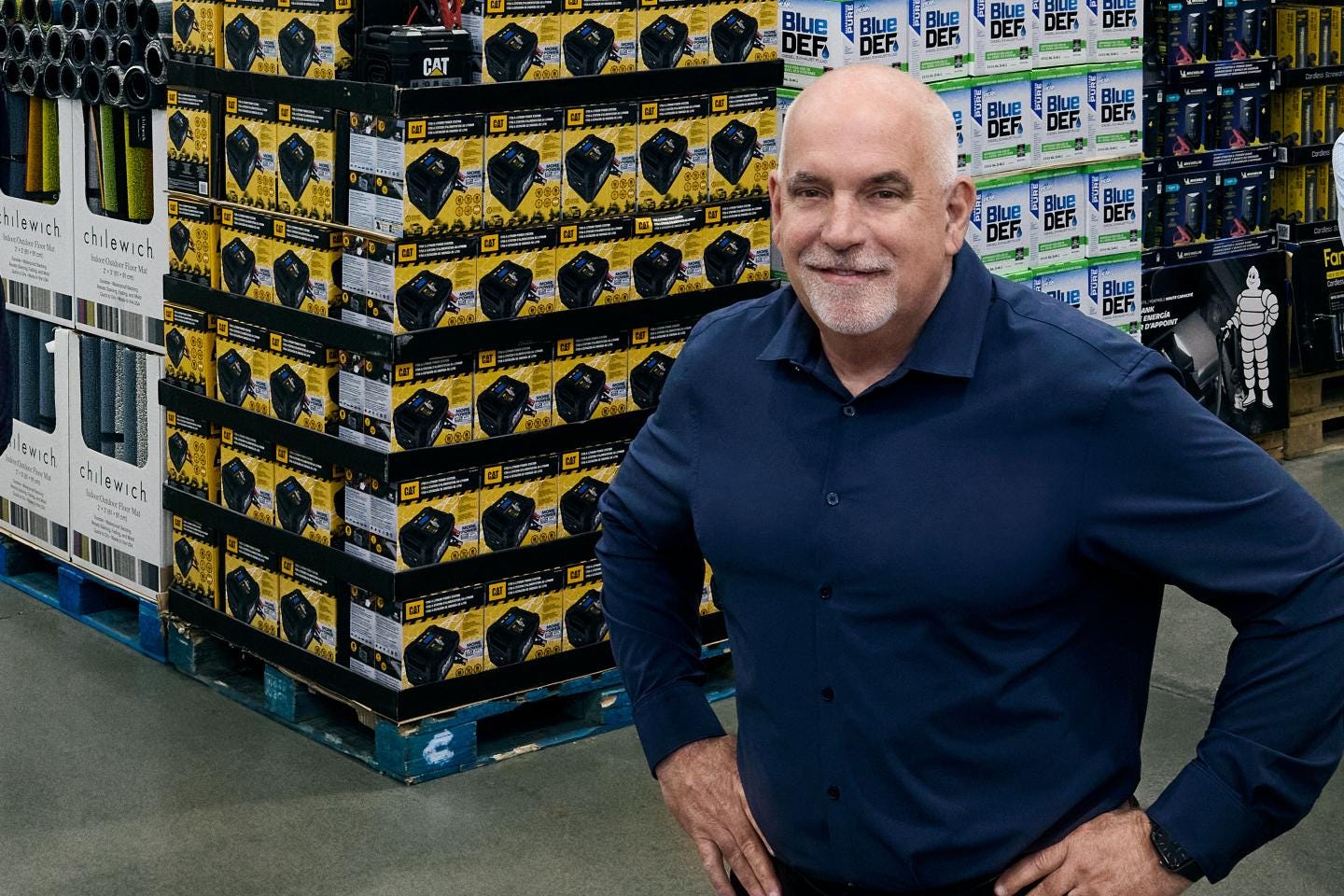
Ron Vachris was born on Staten Island in 1965. His father was a utility lineman who, after one too many freezing winters working on the poles, moved the family to Arizona when Ron was a teenager.
In 1982, Ron was studying business at Glendale Community College outside Phoenix. Over the holiday break, he took a seasonal job driving a forklift at Price Club, a members-only warehouse store. It wasn’t glamorous. The company was small, with about 17 warehouses. But its founders, Sol and Robert Price, had built a culture of treating and paying people well, and they talked about growing to 200 locations someday.
The break ended, and he didn’t go back. “I’m learning more here in real life than I am at school about business,” he later explained. He decided to stay for a little while and never finished his degree.
After several years on the forklift, he became an assistant warehouse manager in Phoenix. In 1991, the company asked him to help open its first Colorado locations, where he co-managed warehouses in Aurora and Westminster, and by 1992 he was running a third. When Price Club merged with Costco in 1993, the company asked him to go back to Arizona and manage warehouses through the transition. In 1999, he was offered a regional VP role in San Diego overseeing 24 Southern California warehouses, a job he held for a decade. In 2010, headquarters called him north to Issaquah, where he oversaw about 62 warehouses across seven Western states.
Then came the ask that scared him. In 2015, Costco co-founder Jeff Brotman asked him to run real estate. Vachris was stunned. He saw himself as a pure operator whose whole career had been running warehouses. He said yes anyway, scouting sites around the world and learning international business at a founder’s side. He calls it one of the best educations he ever had in global business. The lesson he still repeats to employees: if someone has confidence in you to take on something new, don’t let discomfort talk you out of it.
A year later, then-CEO Craig Jelinek asked him to try something new again: running merchandising and all of Costco’s buying. In 2022, he was named president and COO, and on January 1, 2024, he became only the third CEO in Costco’s history. That fiscal year, revenue grew 5% to $254 billion.
Ask him how he did it, and he won’t hand you a strategy. His father’s advice was “Don’t chase a title.” His own version is just as plain: work alongside great people, pay attention, listen, and learn what they teach you.
Inside Costco, he says, there are plenty of people like him. There’s just only one CEO seat. The numbers back him up: 87% of Costco’s 876 warehouse managers started as hourly employees. Its head of merchandising started as a door greeter. The executive in charge of fresh foods started by cleaning the meat department at night.
Nobody taught Vachris the business in a classroom. He learned it pallet by pallet and warehouse by warehouse, and he kept saying yes each time the company asked him to learn a new part of it.
II. The Girl Who Found the Defects
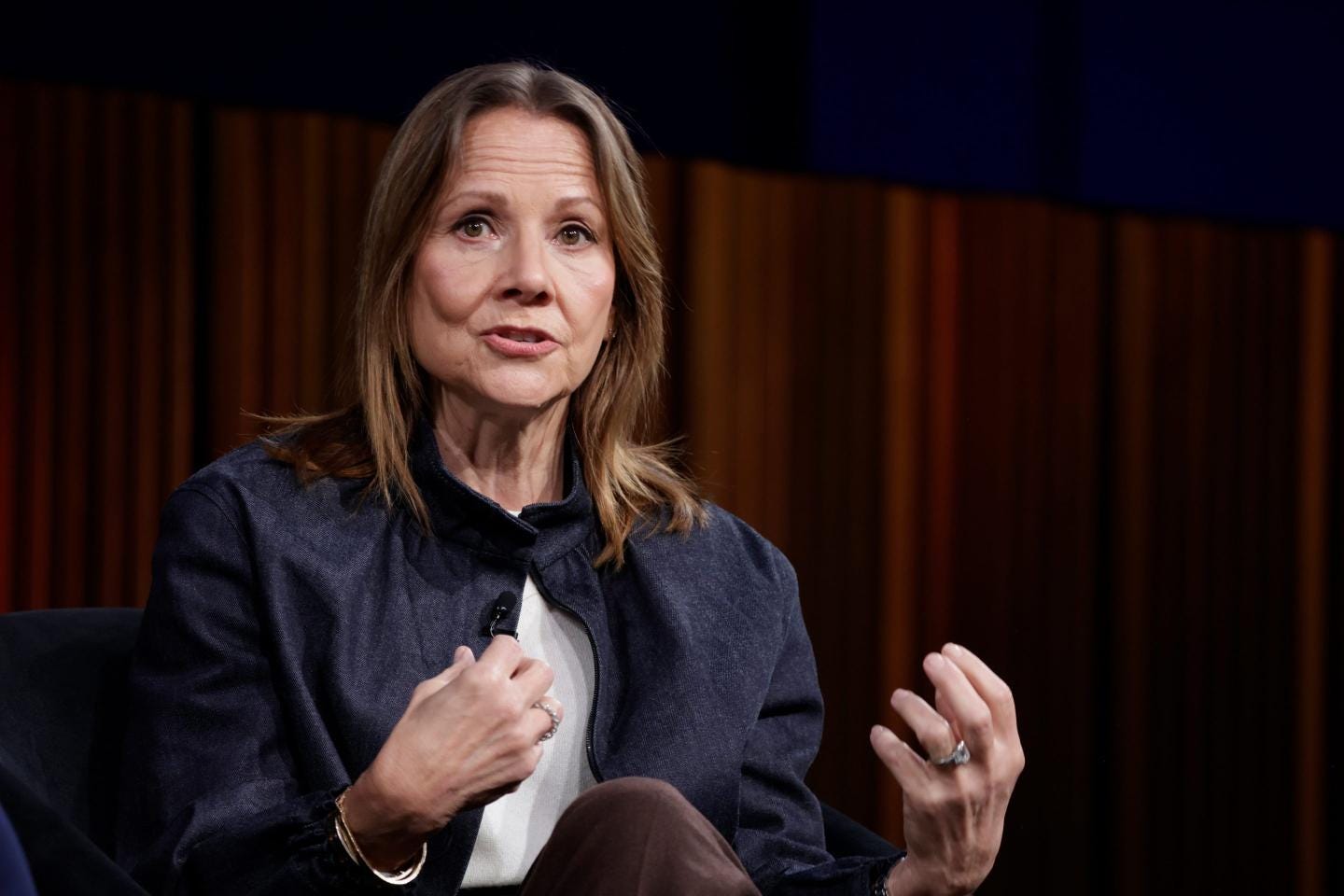
Mary Barra grew up inside the company before she ever worked for it. She was born Mary Makela in Royal Oak, Michigan, in 1961. Her father spent 39 years at GM’s Pontiac division, starting as a die maker on the assembly line.
Her first job came through the school she chose. The General Motors Institute in Flint, now Kettering University, ran on a co-op model: students alternated between classes and paid work at GM plants. In 1980, at 18, Barra enrolled, and her first assignment was at the Pontiac plant inspecting the hood and fender panels of Pontiac Grand Prix cars. The job paid her tuition. It also gave her an early lesson. She kept finding defects. “It was not a good time for GM quality,” she has said.
She graduated in 1985 with an electrical engineering degree and started as a senior engineer at the Pontiac Fiero plant. GM quickly marked her as management material. In 1988, it gave her a fellowship to Stanford, and she finished her MBA in 1990.
Barra’s career wasn’t a linear path.
First came a job as executive assistant to CEO Jack Smith, a posting GM gave to rising stars. She has said it exposed her to the whole operation. Next, she was asked to fix a struggling internal communications department. In 2003, she took over the ailing Detroit-Hamtramck assembly plant, which led to running vehicle manufacturing engineering from 2004 and global manufacturing engineering from 2008.
Then the company itself broke. Right after GM’s 2009 bankruptcy, CEO Ed Whitacre put her in charge of human resources, a job that isn’t normally on the path to CEO. It mattered anyway: GM needed to keep its best people from leaving so it had the talent to recover, and few left. Her signature move there was small and telling. She cut GM’s 10-page dress code down to two words: “dress appropriately.” Her own HR team pushed back and wanted to add specific rules to the manual. She held the line. She reasoned that if GM trusted managers with millions in budget and teams of people, it could trust them to judge what to wear.
In 2011, CEO Dan Akerson pulled her out of HR to run global product development, a division he described as chaos. She took it on with almost no experience designing cars. She cut the number of vehicle platforms, and in 2013 purchasing and supply chain were added to her responsibilities.
She has said she never set out to become CEO. Her rule was simpler: whatever job you have, own it and “do it like you’re going to do it the rest of your life.”
In January 2014, she became CEO, the first woman to run a Big Three automaker. Weeks later, the teenager who found defects faced the biggest one in the company’s history. In her first year, GM issued 84 safety recalls covering more than 30 million cars, and she testified before Congress about the faulty ignition switch. She told lawmakers the company would do the right thing, and she apologized to the families of those who were hurt or killed. Then she launched “Speak Up for Safety” to rebuild the company’s safety culture.
Twelve years later, she still runs GM, nearly half a century after she first walked onto the Pontiac line.
III. The Intern Who Kept Raising Her Hand
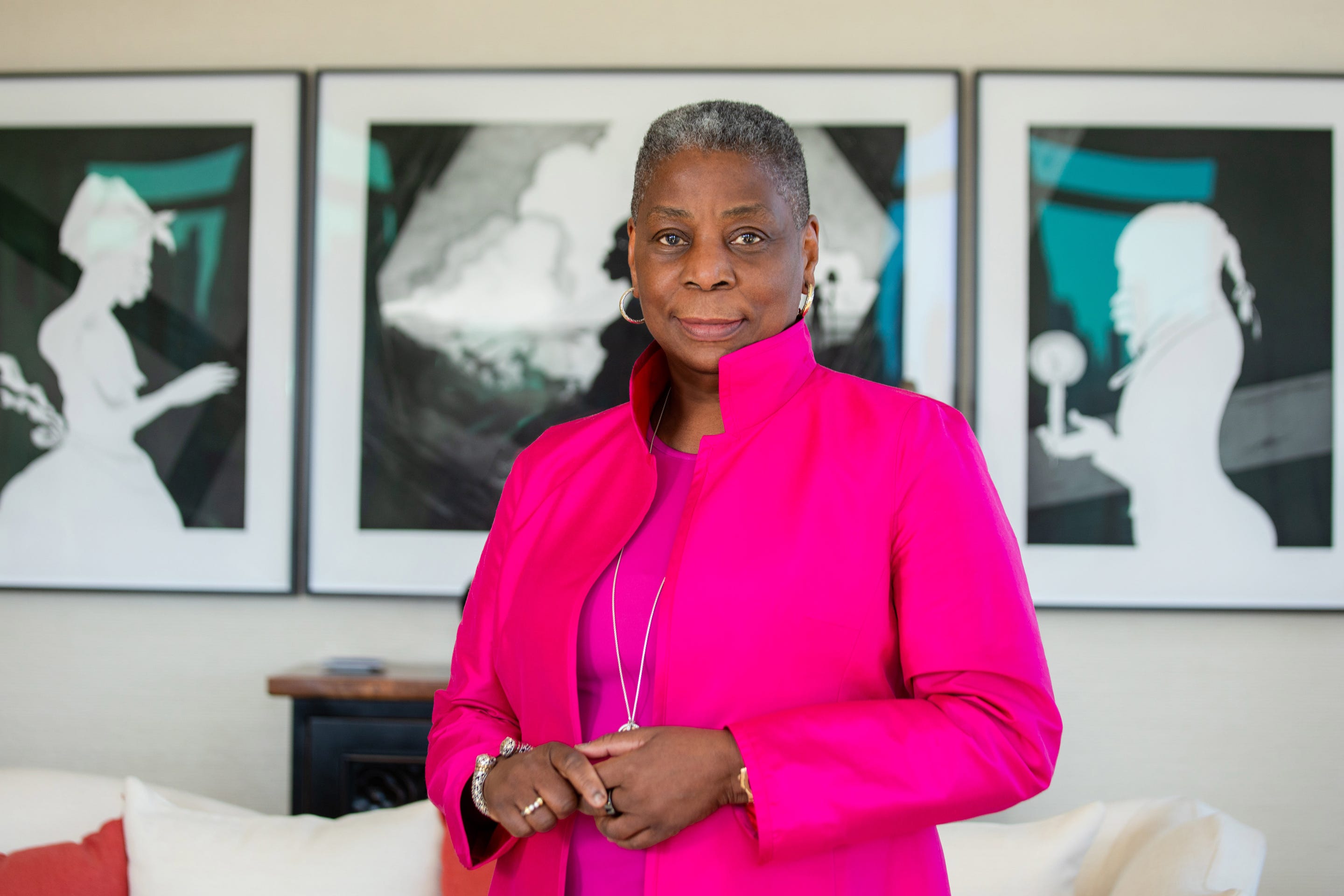
Ursula Burns grew up with what she has described as three strikes against her: she was Black, a girl, and poor. Her single mother, a Panamanian immigrant, raised three children in public housing on the Lower East Side. She took in ironing and ran a daycare from home so the kids could attend Catholic schools. Her highest annual income was $4,400.
Burns calls herself accidental to everything, both the engineer and the executive. As a high school senior, she was good at math and asked a guidance counselor, a nun, what to do next. The counselor offered three options: nun, nurse, or teacher. Burns knew none of those salaries would lift her family. So she went to the library and found a Barron’s guide listing starting salaries by degree. Chemical engineering paid the most, so that became the plan, even though she had no idea what engineers actually did.
She chose Brooklyn Poly because it was close enough to walk home and help her mother. A state opportunity program covered her full tuition and gave her a stipend for the subway and food. She switched to mechanical engineering after deciding she hated chemistry.
Her first real work in the field came before Xerox. She spent two summers at Bell Labs, where a Black engineer named Roland Harris became her first role model. He showed her how the work was done, and also that she belonged there. In 1980, she did a summer internship at Xerox. When she tried to join full-time after graduation, Xerox told her no, not yet. “You need a master’s degree, and we’ll pay.” With a fellowship from the GEM consortium, she finished her Columbia master’s in 18 months and joined Xerox in 1981. She stayed 38 years.
Through the 1980s, she did the unglamorous work of product development and planning. Then she raised her hand. At a 1989 town hall, an employee asked whether Xerox’s diversity push meant lowering hiring standards. Senior executive Wayland Hicks answered casually, and Burns asked him why he would entertain the question at all.
She expected to be reprimanded. Instead, Hicks called her in and offered her a job as his executive assistant. At 31, it felt like a step backward, but she took it, understanding that being close to power was its own education. In June 1991, she became executive assistant to chairman and CEO Paul Allaire. She has described the role as chief cook and bottle washer, essentially a training position. Allaire later recalled asking her what she thought after a string of high-level meetings. Her answer: “I could do your job.”
That training job opened more doors. Vernon Jordan, the civil rights leader and Xerox board member, met her in a hallway, stopped her, and asked why she hadn’t introduced herself. That night he sent her a typed note and three books to read. He remained her mentor for the rest of his life.
From there she ran businesses: the fax and office color business, a copier group in London, and global manufacturing as VP from 1999. In 2000 she became senior VP of corporate strategic services, overseeing manufacturing and supply chain. As Xerox nearly collapsed, she worked alongside Anne Mulcahy, and the two steered the company through it. She became president in 2007 and CEO in July 2009, succeeding Mulcahy. It was the first time one woman handed a Fortune 500 company to another, and Burns became the first Black woman to lead a Fortune 500 company.
Where you are is not who you are.
What Actually Compounds
Look past the titles, and these three stories share a structure.
The floor is the curriculum. Each of them started where the product physically lives: on a forklift in a warehouse, on the line checking panels, in engineering at the drafting table. By the time they reached the top, they understood the business from the bottom, which is where most businesses break. Barra didn’t learn quality from a dashboard. She learned it with her hands at 18.
The detours were the promotions. Burns took an assistant’s job that looked like a demotion. Barra went from manufacturing to communications to HR, then to product development with no design background. Vachris gave up a degree and later moved into real estate and merchandising. Each “sideways” move added a view of the business that specialists never get.
Speaking up raised the ceiling. Burns’s career didn’t take off because she stayed quiet and competent. It took off the day she challenged a senior executive in public. Loyalty got her in the room. Candor got her noticed.
Staying only compounds if the place bets on you. This is the part motivational posts leave out. GM paid Barra’s tuition and her Stanford MBA. Xerox paid for Burns’s master’s. Costco is built on promoting from within. Their patience paid off because each institution invested back. If you’re an employee, pick a place that grows its people. If you’re a founder, you’re building the warehouse someone else will spend forty years climbing, so build one worth staying in.
You Are Not Behind
If you’re three years into something nobody is clapping for, stuck on the forklift, doing the unglamorous inspections, sitting in meetings where you’re the least senior person in the room, these three stories aren’t asking you to hope. They’re asking you to be excellent at the job in front of you, to learn the business from the floor up, to take the strange sideways move, and to raise your hand when it matters.
The invisible years aren’t a waiting room. They’re the foundation.
“Where you are is not who you are.”
Be Bold. Be Real. Be Anomalous.