


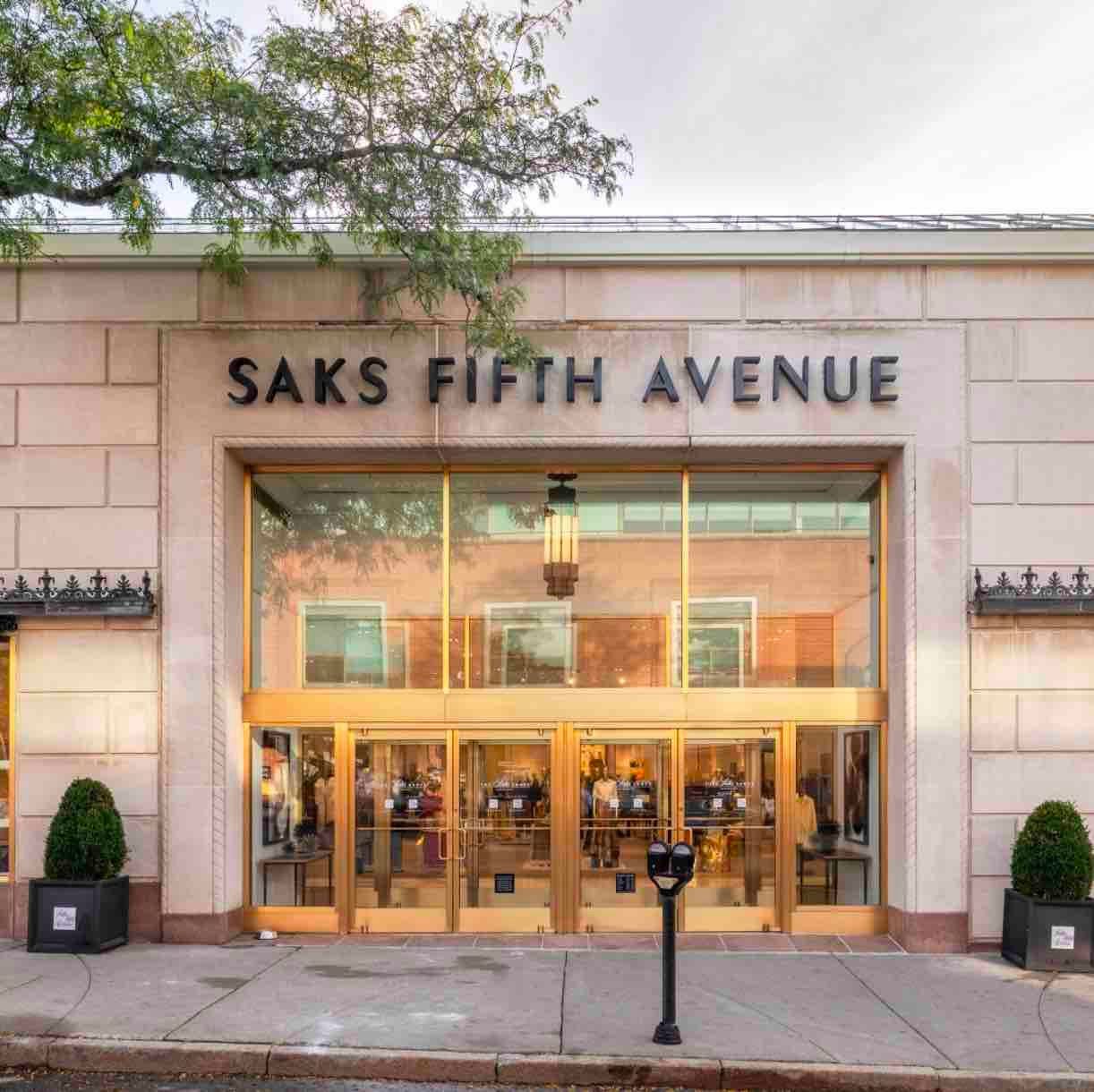
Walk through a Saks Fifth Avenue today, and everything looks the same. The marble floors. The perfume counters. The quiet hum of luxury. But beneath the surface, something has broken. On January 13, 2026, Saks Global, the entity created from the $2.7 billion merger of Saks Fifth Avenue and Neiman Marcus, filed for Chapter 11 bankruptcy. The company that was supposed to define the future of American luxury couldn’t pay its vendors.
And it wasn’t alone.
Francesca’s filed in February. Pat McGrath Labs filed in January. Forever 21 liquidated entirely in March 2025. The LYCRA Company, the supplier that put the stretch in your workout gear, filed for bankruptcy in March 2026. In the span of a few months, names that shaped how Americans shop, dress, and see themselves began appearing in bankruptcy court.
The easy story is that retail is dying. The more interesting story is what happens after the filing, because that’s where you find out which brands actually had something worth saving.
What’s Driving the Wave
Three forces are converging to create this moment, and none of them is new. What’s new is that they’ve stopped being manageable.
1. The Debt Reckoning
When interest rates were near zero, retailers could carry significant debt loads cheaply. Private equity-backed buyouts loaded companies with leverage on the assumption that cheap refinancing would always be available. That assumption died in 2022. Retailers who could refinance did so in 2025, often at painful terms. Those who couldn’t are now in bankruptcy court.
The Saks-Neiman deal is the most visible example. To fund the $2.7 billion acquisition of Neiman Marcus, Saks raised $2.2 billion in high-yield bonds. Between the two legacy businesses, the combined company entered 2026 with roughly $4.7 billion in total debt. When it missed a $100 million interest payment in December 2025, the spiral began: vendors stopped shipping, shelves thinned, sales dropped, and the debt became unserviceable.
This is not a retail story. It is a capital structure crisis.
2. The Consumer Has Moved On — Permanently
E-commerce didn’t just add a channel. It restructured consumer expectations entirely. The average shopper now begins their purchase journey online, even if they complete it in a store. Brands that couldn’t build a compelling digital presence lost relevance before they lost revenue.
Meanwhile, the rise of ultra-fast fashion, with Shein turning a trend into a $7 garment in days, has compressed the timeline in which any physical retailer can respond. Forever 21, which was once a fast fashion brand, filed for bankruptcy in March 2025 because it couldn’t move fast enough. The traditional retail calendar, with its seasonal buys and six-month lead times, is a competitive liability in this environment.
3. The Luxury Slowdown Hit Harder Than Expected
The luxury sector is experiencing what analysts are calling a “spending hangover.” After years of post-pandemic splurging, high-income consumers are pulling back. The irony for Saks Global is sharp: the merger was designed to create a fortress against exactly this kind of pressure. Instead, the deal itself became the pressure.
Moody’s currently holds a negative outlook on the retail sector for 2026 as a whole. As one S&P analyst put it plainly: consumers can spend as long as they have a job. With consumer confidence at historic lows and employment the key variable to watch, the wave isn’t done.
The Part Nobody Is Talking About
Here’s what gets lost in the bankruptcy headlines: Chapter 11 is not a death sentence. It is a legal tool specifically designed to let a company separate its financial problems from its operational ones. The court freezes the debt, gives the business room to breathe, and creates a structured process for figuring out what’s worth keeping.
For the right kind of brand, that’s not an ending. It’s a reset.
The brands coming out of this wave in better shape than they entered are the ones that used Chapter 11 for exactly what it was designed for: isolating a capital structure problem without destroying the underlying asset. The brands that didn’t make it out are the ones that discovered, under court supervision, that the underlying asset wasn’t there. That distinction is key.
This Isn’t New
The idea that bankruptcy can be a beginning rather than an ending is well-supported by history, and the numbers are more encouraging than most people realize.
A Wharton study analyzing Chapter 11 filings between 2019 and 2021 found that 88% of companies that went through the process successfully emerged from bankruptcy.
The most dramatic proof of this is Marvel Entertainment. In December 1996, Marvel filed for Chapter 11 after declining comic book sales and a collapsing trading card market left it financially unviable. The company used the restructuring to pivot, acquiring toy maker Toy Biz, licensing its characters aggressively, and laying the groundwork for what would become the Marvel Cinematic Universe. Today, Marvel is the most valuable entertainment franchise on earth. The characters were always the asset. Bankruptcy just gave the company the chance to reorganize around them.
General Motors filed for bankruptcy in June 2009 at the height of the financial crisis, one of the largest bankruptcies in American history. With government backing and a complete leadership overhaul, it shed decades of legacy costs, closed underperforming brands, and emerged leaner. It went public again just 18 months later. The brand equity, the idea of American-made cars, was never in question; it was the cost structure.
In fashion specifically, Betsey Johnson filed for Chapter 11 in 2012 after profits fell sharply from their mid-2000s peak. Nearly all retail stores closed. Rather than disappear, Johnson used the reset to introduce a new lower-priced line, pivot to e-commerce, and rebuild distribution through wholesale partners like Macy’s. The brand survived because the creative identity, her signature whimsical aesthetic, was something customers recognized and wanted. That didn’t go away when the stores closed.
The pattern across all three is the same one playing out in retail right now: the companies that came back knew exactly what they were, and used the bankruptcy process to shed everything that wasn’t that.
The Identity Test
Think of every bankruptcy filing as a question the market is asking: Is there something real here?
Pat McGrath Labs filed on January 22, 2026, not because customers stopped loving the brand, but because a lender dispute triggered an asset auction the founder didn’t consent to. The filing paused the auction, gave the brand court protection, and created the space to find better capital. Within three months, Pat McGrath Labs had secured $30 million in new financing, restructured under new ownership with GDA Luma, and emerged from Chapter 11 with its creative identity intact. Dame Pat McGrath remained as Chief Creative Officer.
The LYCRA Company filed on March 17, 2026, with a prepackaged restructuring already agreed to by the overwhelming majority of its creditors. The plan was designed to eliminate over $1.2 billion in debt while keeping its 2,000 employees, eight manufacturing facilities, and customer relationships completely intact. It is expected to emerge within 45 days. The filing wasn’t a crisis; it was a tool. The underlying business, the fiber technology, the brand recognition, the supply relationships, none of that was broken.
Saks Global is a harder case. The filing stripped away most of its off-price business, installed a new CEO, and secured $1.75 billion in financing to fund the restructuring. It may yet emerge. But the question hanging over it is whether a luxury department store model built on physical flagships, expensive real estate, and a consumer who increasingly shops differently can be restructured into relevance, or whether the capital structure problem was always layered on top of a model problem. Something to think about.
Francesca’s and Forever 21 answered the question differently. Francesca’s, filing for the second time in six years, ended in full liquidation of all ~450 stores. A capital infusion fell through, suppliers lost their own financing, and lenders issued a notice of default. There was no going-concern buyer. Forever 21, which had once defined affordable trend-chasing for a generation, couldn’t find a path back, either losing $400 million over its final three fiscal years before liquidating 354 U.S. stores entirely. When the court looked for something to reorganize around, it wasn’t there.
Bankruptcy doesn’t kill brands. It reveals them.
What This Means Beyond Retail
For anyone building something, a brand, a company, a career, the 2026 retail wave is worth studying not as a cautionary tale about debt or disruption, but as a case study in what holds when everything else gives way.
The brands that are coming out the other side have a few things in common. They stood for something specific enough that customers, creditors, and new investors could see the value beneath the financial wreckage. Their identity was the asset. The capital structure was the problem. And those two things, it turns out, can be separated.
The deeper question, the one worth sitting with, isn’t whether your business could survive a bankruptcy filing. It’s whether, if you stripped away everything except what you actually stand for, there would be enough left to rebuild around.
That question doesn’t require a bankruptcy court to answer. But the 2026 wave is a good reminder that at some point, the market will ask it for you.
New article every Tuesday.
Be Bold. Be Real. Be Anomalous.
Follow for more Be Anomalous stories, conversations, and behind-the-scenes.
Website | Instagram | LinkedIn | YouTube | @iamsaimenon