


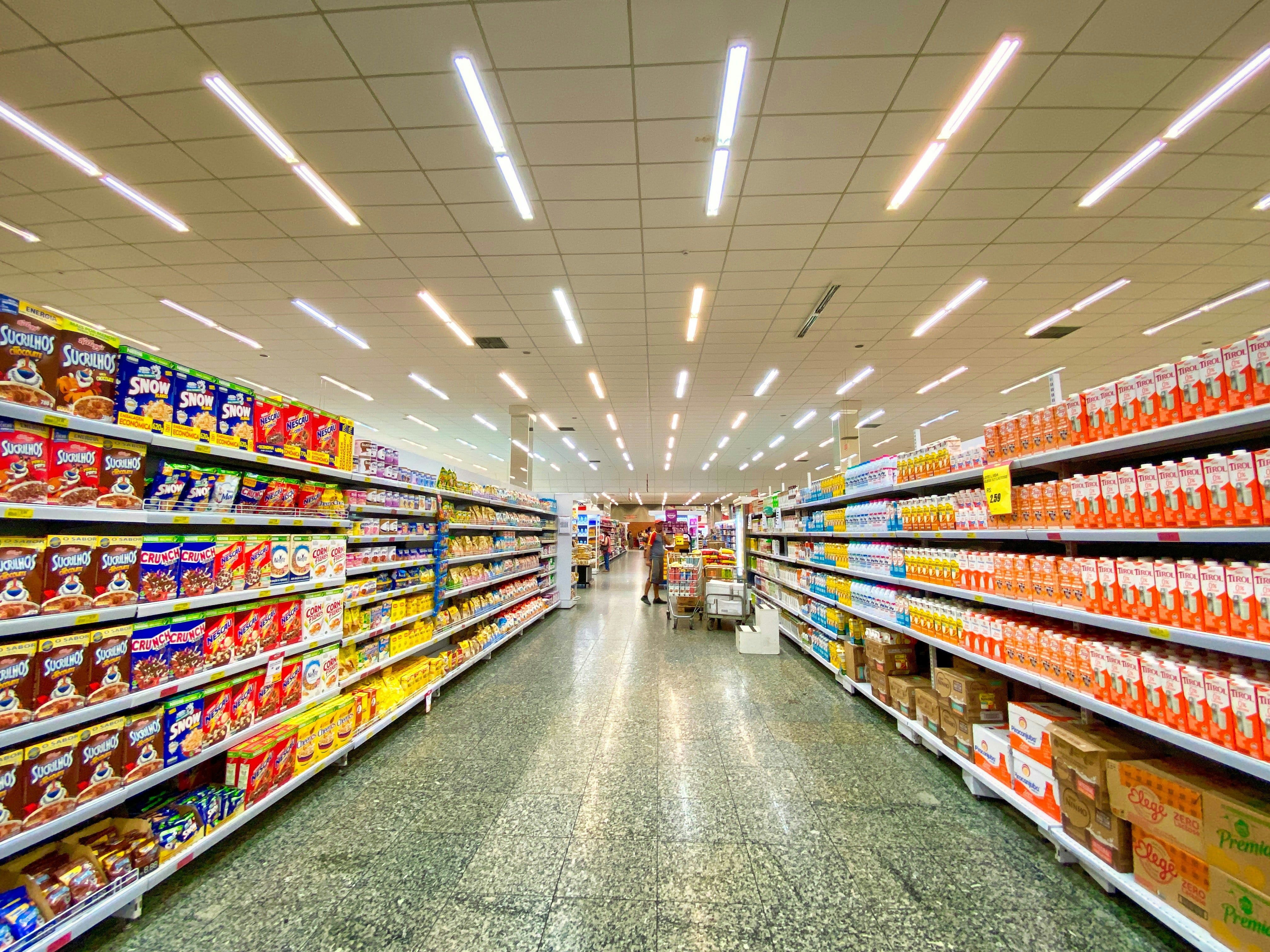
Walk into any Costco, and you’ll find it almost immediately: the Kirkland Signature label, displayed across everything from coffee to cashmere. At first glance, it looks like a house brand something to grab when you’re watching your wallet. Look closer, and you’ll find it’s made by Starbucks, Duracell, or Jelly Belly, sold at a fraction of the national brand price, and generating an estimated $60 billion in annual sales. That’s more than Nike.
The store brand, also called private label, is no longer a value proposition. It’s a profit engine, a loyalty machine, and increasingly, an existential threat to the brands that helped build the retail industry in the first place.
Store brands now account for roughly one in five consumer packaged goods sold in the United States, a share that has grown every year for the past decade. Understanding how they work and what they do to everyone else on the shelf has become essential for anyone tracking the modern retail landscape.
The Economics of the Shelf
To understand why store brands are so powerful, you need to understand where the money goes in a typical consumer goods transaction.
When a national brand sells a product, the manufacturer covers production costs, then adds significant marketing and advertising spend, often 15 to 25 percent of revenue, to build brand awareness that justifies a premium price. On top of that, the manufacturer pays the retailer slotting fees: essentially, rent to occupy shelf space, particularly prime eye-level real estate. By the time the product reaches the consumer, the retailer’s margin is typically 15 to 20 percent.
A store brand changes every one of those variables.
The retailer contracts directly with a manufacturer, often the same manufacturer making the national brand, which removes the marketing spend and slotting fees, and keeps the price lower for the consumer while capturing dramatically higher margins for itself. Where a national brand yields a 15 to 20 percent margin, the equivalent store brand often yields 35 to 55 percent. The retailer owns the shelf, so there is no auction for placement. The product goes where the retailer wants it.
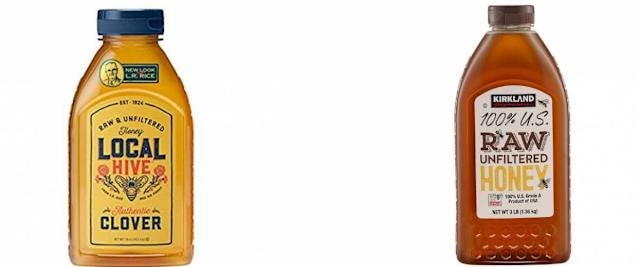
The consumer wins too on price. Store brand products typically come in 20 to 30 percent cheaper than their national brand equivalents. For a household buying groceries every week, that gap compounds into meaningful savings. Retailers have learned to use this positioning deliberately: lower prices on store brand staples can be what gets a shopper through the door, and then through the rest of the store.
How the Major Players Execute
Not every retailer approaches private label the same way. The most sophisticated operators have developed distinct strategies that reflect their customer base, category mix, and competitive positioning.
Costco: The Membership Multiplier
Kirkland Signature is probably the most studied private label program in the world, and for good reason. Costco has built a brand so trusted that shoppers actively seek it out, the inverse of the traditional private label dynamic, where house brands compete on price because they lack brand pull.
The formula is deliberate. Costco caps its markup on any item at 15 percent, a policy that forces it to source with exceptional efficiency. It also contracts with best-in-class manufacturers. The Kirkland Signature batteries are made by Duracell; the coffee was long roasted by Starbucks, which means the quality is genuine. The result is a membership that renews at over 90 percent annually, driven in significant part by the value Kirkland provides.
The store brand doesn’t just generate margin; it is the reason people come back.
Target: When Private Label Becomes a Brand
Target’s approach is philosophically different. Where Costco uses Kirkland to deliver value, Target uses its owned brands to deliver aspiration.
The retailer has built more than ten owned brands, several of which exceed $1 billion in annual sales. Cat & Jack, its children’s apparel line, generates more than $3 billion a year. Threshold is the home care brand. Good & Gather has quietly become a credible grocery label. They are positioned and marketed as brands in their own right, with their own aesthetic and identity.
The implication is significant: Target’s owned brands can command comparable prices to national brands while still delivering higher margins, because the retailer controls the full value chain.
Safeway and Kroger: The Tiered Approach
Traditional grocery retailers have taken a more systematic route. Rather than building one signature brand, they run multiple tiers simultaneously: a value label for price-conscious buyers, a mid-tier for everyday quality, and a premium or organic label (O Organics, Simple Truth) for shoppers willing to pay up. Each tier competes with a different national brand segment, meaning the retailer captures margin at every price point rather than just one.
Store brands now account for 25 to 30 percent of grocery units sold at these chains, and the margin differential versus national brands has been a meaningful driver of profitability even as food inflation has complicated the broader business.
What This Does to National Brands
For the brands sharing shelf space with a private label competitor, the consequences range from uncomfortable to existential, depending on the category.
The most immediate pressure is positional. Retailers control shelf placement, and as their own brands grow, the incentive to give national brands prime real estate diminishes. Products slide from eye level to ankle level. SKU counts get trimmed. In some categories, national brands that fail to maintain volume get delisted entirely.
The second pressure is financial. To retain prime placement, national brands pay slotting fees, and as store brands expand, the negotiating leverage shifts. The retailer now has an alternative to offer shoppers. The national brand needs the shelf more than the shelf needs the brand.
The third, and subtlest, pressure is perceptual. When Kirkland Signature batteries sit next to Duracell, made by the same factory, the brand premium becomes harder to justify. Consumers who experience the equivalence firsthand rarely forget it.
The threat varies sharply by category. Commodity goods, such as paper towels, dish soap, canned goods, and pantry basics, are the most vulnerable. The functional difference between a national brand and a store brand equivalent is often minimal, and price sensitivity is high. Premium, identity-driven categories are more resilient. Nobody buys private-label perfume as a status signal. Dyson doesn’t lose much sleep over a Costco competing vacuum. Stanley and Starbucks have built communities where the brand itself is part of the product’s value.
The Rebalancing of Retail Power
For most of the 20th century, retail power flowed toward the brands. The companies that built consumer desire: Procter & Gamble, Nestlé, Colgate, and Unilever effectively dictated shelf terms to retailers who needed their products. The late 20th century began shifting that balance as Walmart and then Amazon demonstrated what scale could do to supplier leverage.
Store brands represent the latest, and perhaps most structurally significant, shift in that balance. They give retailers not just scale leverage but category independence. The retailer no longer just sells brands; it competes with them. It has learned, often from the brands themselves, how to manufacture, market, and distribute, and it has done so while capturing the margin that previously went elsewhere.
The national brands that will survive this era are the ones that stand for something a retailer cannot replicate: a genuine innovation, a community, an identity, a service. Everything that is merely functional is, eventually, a cost to be optimized away.
New article every Tuesday.
Be Bold. Be Real. Be Anomalous.