


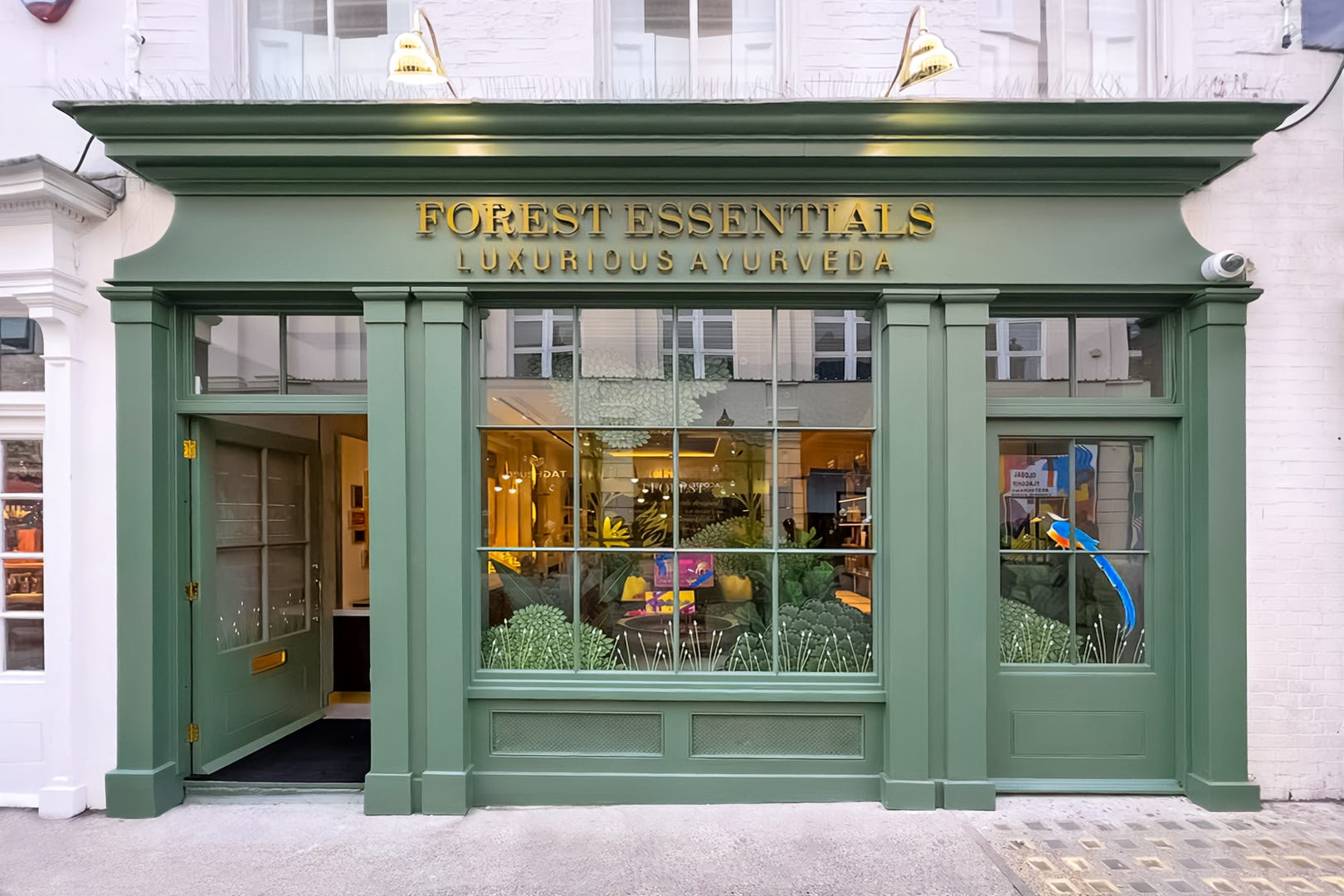
There’s a stretch in Mira Kulkarni’s life that doesn’t show up in the headlines about her billion-dollar company. It’s not the Estée Lauder deal, not the London store, not the wedding in Jodhpur that changed everything. It’s two years, sometime after 2000, when she was working out of her home in Delhi, reformulating the same soaps and oils over and over, with no product on a single shelf and no guarantee any of it would ever leave her kitchen.
If you’re in the middle of building something right now, the version where you’ve put in real time and still have nothing to show for it, where the thing you’re making only exists in your head and a few notebooks, that’s the part of her story worth sitting with the longest. Not the acquisition. The two years before anyone had a reason to believe in her.
Starting Late, Starting Small
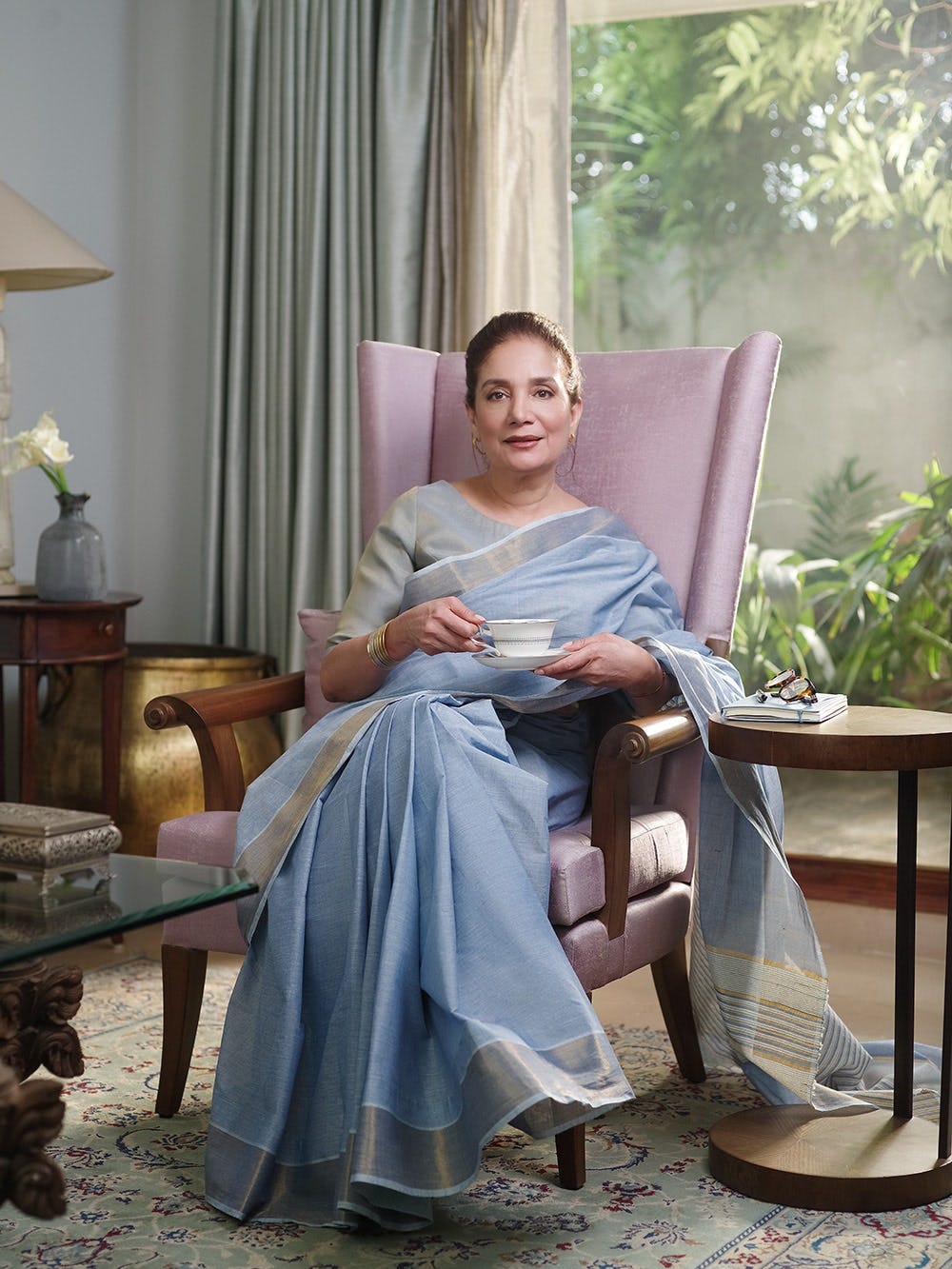
Kulkarni married at twenty. She’s described herself at that age as completely unaware and unexposed, a young wife who moved from Delhi to Chennai, then came back years later with two small children to raise. There was no five-year plan sitting underneath any of it. Looking back, she’s said something easy to feel but hard to say out loud: that so much of her early life passed by before she understood what she was actually capable of. “You’re in this little pond,” she said, “and you don’t know what to do.”
She didn’t leave the pond at twenty-five, or thirty, or even forty. She left it in her mid-forties, an age the startup world still quietly treats as too late, as if ambition comes with an expiration date. In 2000, with ₹2 lakh, roughly $4,500 at the time, and no outside money or safety net beyond her own conviction, she started making soaps and candles at home using coconut oil, almond oil, and ghee.
Ayurveda hadn’t been given a real chance at luxury. It had only ever been sold as medicine or sold cheaply.
She tested the idea small, low-stakes, low-cost: a home exhibition she called Candlemania, beeswax candles infused with herbs and pressed flowers, made from scratch in her own house. It sold out. That was the whole go-to-market plan: make something honest, put it in front of people, see if it lands.
The Part That Doesn’t Make It Into the Success Story
It took nearly two years of testing after that before the first real products shipped. Two years of a business that, from the outside, looked like nothing was happening. No funding round to announce. No press. No proof it was working, other than her own sense that the ghee, the sandalwood, the saffron needed to actually do what centuries of use said they could do, and that shortcutting that process would show up eventually, in a product that didn’t hold up.
This is the stretch that gets skipped over in most versions of a founder’s story, because it isn’t dramatic; it’s just quiet, uncertain, unglamorous work with no external validation. But it’s also the reason nobody could easily copy what came next. A competitor could copy an ingredient list off a label in an afternoon. Nobody could compress two years of getting the formulation right into a shortcut. If you’re in that stretch right now the invisible part, the part where you’re not sure it’s going anywhere it’s worth remembering that this is usually the part that becomes the moat later, even though it doesn’t feel like one while you’re in it.
The Hotel Order That Changed the Trajectory
The Delhi Hyatt Regency began ordering the soaps for its rooms after the property’s general manager personally requested bath essentials for the hotel. One relationship did something no advertising budget could have: it put Forest Essentials into the hands of exactly the people who could afford to buy the full-size version later, in a setting where trust already came built in.
By the time the first standalone store opened at Khan Market in Delhi in 2003, Forest Essentials wasn’t introducing itself to strangers. It had already quietly earned a reputation with the people who mattered most.
Growth from there was slow, on purpose. In 2005–2006, the company posted sales of around Rs. 6 crore, but nowhere near explosive built one category at a time: body oils, then bath essentials, then body polishes, then hair care. Kulkarni has described the model plainly: profits went back into the business, growth was slower for it, and there was no external target to hit and no funding to chase. No burn rate. No runway anxiety. Just a founder deciding the pace of her own credibility, even when slow, probably didn’t feel like a strategy; it probably just felt like reality.
A Meeting That Was Supposed to Last Thirty Minutes
In 2007, Leonard Lauder, chairman of Estée Lauder, whose mother had built the company from nothing, traveled to India for a wedding in Jodhpur and was gifted some Forest Essentials products. He was curious enough to ask his Indian country manager to look into the company. A meeting was scheduled in Delhi, meant to last thirty minutes. It ran two hours because Kulkarni and Lauder realized their founding stories rhymed two people who’d each built something out of very little, decades and an ocean apart.
A few months later, Estée Lauder took a 20% stake in Forest Essentials, its first investment in an Indian brand. It would have been easy, at that point, for Kulkarni to oversell, to dilute faster than made sense, to hand over more control than the moment required just because the offer was finally there. She didn’t. She treated the investment as fuel, not rescue. The board met twice a year to talk about long-term strategy. Estée Lauder stayed out of day-to-day operations. And the stake didn’t move again for twelve years; it stayed at 20% until 2020, when it rose to 49%. Not because anyone was hedging, but because two parties who already trusted each other felt no urgency to renegotiate something that was working.
What Nearly Three Decades of Patience Bought Her
By the time Forest Essentials was competing in India’s crowded 2020s beauty market, a landscape Kulkarni has described watching with something close to bewilderment, as thousands of new, VC-backed beauty brands appeared almost overnight, most indistinguishable from one another, the slowness had quietly become the advantage. Nearly 200 stores across India. Exports to 120 countries. A first international store in London’s Covent Garden in 2022 opened only after the brand had already proven itself online to the UK’s Indian diaspora, rather than betting everything on an untested physical launch.
And in March 2026, Estée Lauder Companies agreed to buy the remaining stake outright — the company’s first-ever full acquisition of an Indian brand, coming after eighteen years of partnership. Estée Lauder isn’t describing this as a rescue of a plateaued asset. Forest Essentials is currently ranked as the country’s top prestige skin care brand, with net sales projected to keep growing at a low double-digit rate. The acquirer’s own leadership has said the name, the pricing, the product strategy, and Kulkarni’s leadership will stay exactly as they are, with her son Samrath Bedi continuing alongside her. The brand keeps its Himalayan manufacturing base, its Ayurvedic R&D, its Indian identity intact — the things a faster-scaling, more anxious version of this company might have traded away for distribution a decade earlier.
If You’re in the Middle of the Hard Part
Here’s the thing worth carrying out of this story, if you’re in your own version of those invisible years right now: Kulkarni wasn’t rewarded for being fast. She was rewarded for being right, slowly, in a way that couldn’t be rushed or faked. She didn’t refuse help when it came; she took Estée Lauder’s investment the moment it was genuinely offered, on terms that let her keep building. The discipline was never about refusing capital or staying small out of principle. It was about not needing anything badly enough to accept it on terms that would have cost her the thing that made the whole effort worth doing.
If you’re sitting on something the world currently treats as ordinary, or cheap, or unglamorous, the question isn’t how to change to fit in. It’s what it would actually take to make the highest-quality version of it, the kind of quality that takes real time and can’t be shortcut by someone with more funding and less patience than you.
Kulkarni spent years with nothing to show anyone. Then twelve more years letting a single investor stake sit untouched, because the relationship didn’t need fixing. She was in her mid-forties when she started. She was sixty-nine when the company she built from a kitchen counter became worth a billion dollars to the people who’d once needed convincing.
The work you put in will be rewarded.
New article every Tuesday.
Be Bold. Be Real. Be Anomalous.
Follow for more Be Anomalous stories, conversations, and behind-the-scenes.
Website | Instagram | LinkedIn | YouTube | @iamsaimenon