


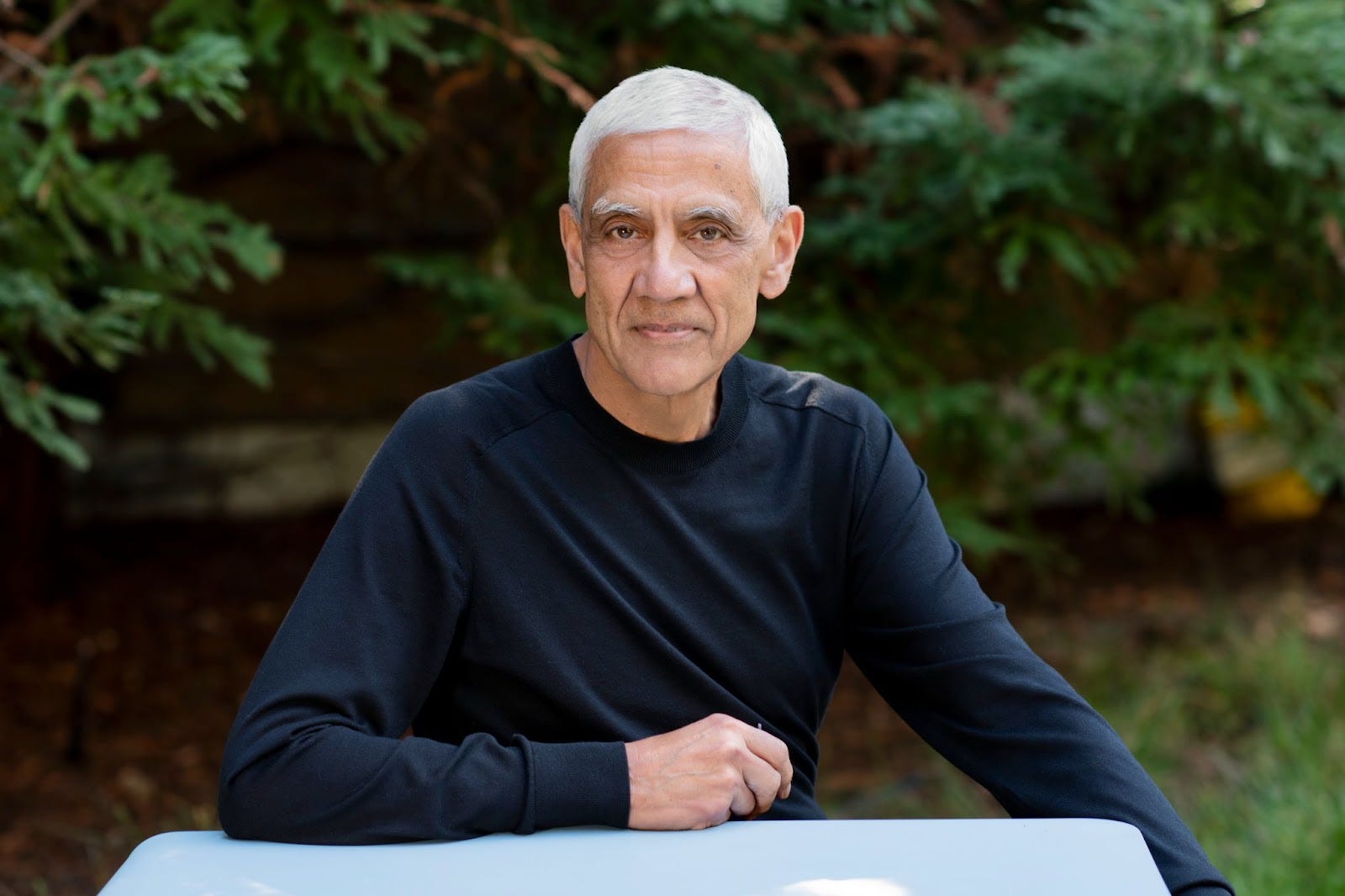
Before there was Sun Microsystems, before Kleiner Perkins, before Khosla Ventures backed the company that would become OpenAI, before any of it, there was a twenty-year-old engineering graduate in India trying to start a soy milk company. He’d noticed something simple: most people around him didn’t have refrigerators, and soybeans were cheap, plentiful protein that didn’t need one. It was a good insight. The company failed anyway. There was no funding to be found, and when he was told he’d have to wait seven years just to get a phone line installed, he did the only thing that made sense to a person who refuses to accept the world as it’s currently arranged. He left for Silicon Valley.
This is the part of Vinod Khosla’s story worth sitting with the longest. Not the venture fund that would one day help buy an NFL franchise. The failed startups that came first, and the fact that he didn’t treat it as a verdict on himself.
“Only those who dare to fail can succeed.”
No Business Connections, Just a Magazine Article
Khosla grew up in an Indian Army household in New Delhi, the kind of household where the expected path was the military, not a garage full of computer parts. He had no business or technology connections of any kind. What he had, at sixteen, was a copy of a trade magazine with a story about a new company called Intel, and a decision he made on the spot: he was going to start a technology company of his own someday. Nobody around him could have shown him how. He simply decided it was going to happen and spent the next several years figuring out the mechanics one degree at a time: a bachelor’s in Electrical Engineering from IIT Delhi, then, after the soy milk company folded, a scholarship to Carnegie Mellon for a Master’s in Biomedical Engineering.
Silicon Valley was the actual destination, though, and getting there ran through Stanford’s Business School. Twice, Stanford rejected him. The second time, an admissions officer told him bluntly that he needed real work experience. So Khosla did something almost nobody would think to do: he took two full-time jobs simultaneously for a year, manufacturing exactly the résumé line he’d been told was missing, then reapplied. Rejected Again.
The Persistence
Most people would have called that the end of the story. Khosla enrolled at Carnegie Mellon’s Business School instead and kept going. But he also, in the meantime, made a point of getting to know every single person in Stanford’s admissions office except the director who kept turning him down — learning the acceptance rates, the waitlist mechanics, all of it — and then simply refused to stop calling. The director eventually put him on the waitlist mostly, by Khosla’s own telling, to get him to stop. He didn’t stop. He called every few weeks.
Carnegie Mellon’s semester started in early September. Stanford’s started a few weeks later. In the gap between those two calendars, days before Stanford’s classes began, someone dropped out. The admissions office called Khosla. He got his spot.
It’s actually the whole operating system he’d run for the next five decades: apply, get told no, absorb exactly what the no was actually about, and come back with the specific thing that closes the gap, instead of a louder version of the same pitch.
Building the Machine, Then Walking Away From It
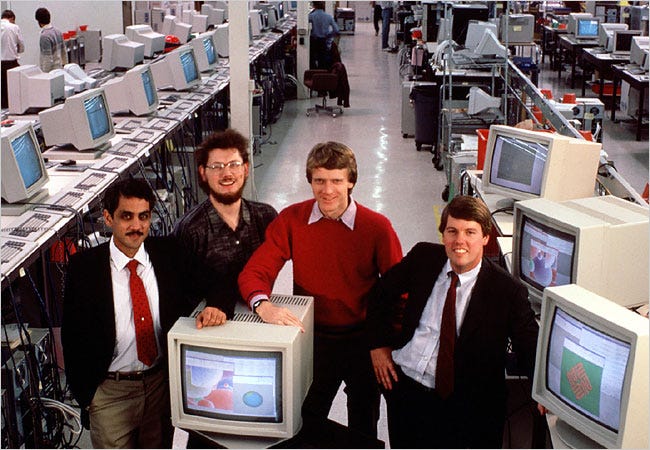
Khosla graduated from Stanford in 1980 and, with three classmates, Andy Bechtolsheim, Scott McNealy, and Bill Joy, founded Sun Microsystems two years later, raising $300,000 in seed money from Kleiner Perkins. As the company’s founding CEO, he helped pioneer open computing systems and the RISC processors that would reshape enterprise computing for a generation. Sun went from nothing to a billion dollars in annual sales within five years. And then, in 1984, at the moment most founders would be settling in to enjoy what they’d built, Khosla left.
He joined Kleiner Perkins as a general partner in 1986 and spent eighteen years there, backing companies like Juniper Networks and Nexgen and turning a single $3 million bet on Juniper into billions in returns for the firm. By any normal measure, this was already a full career’s worth of success. In 2004, he walked away from that too, putting roughly $1.5 billion of his own capital behind a new firm built around a philosophy most institutional investors would consider reckless: fund the “science experiments” the ideas so early, so unproven, so likely to fail, that safer money wouldn’t touch them.
The Freedom to Fail, on Purpose
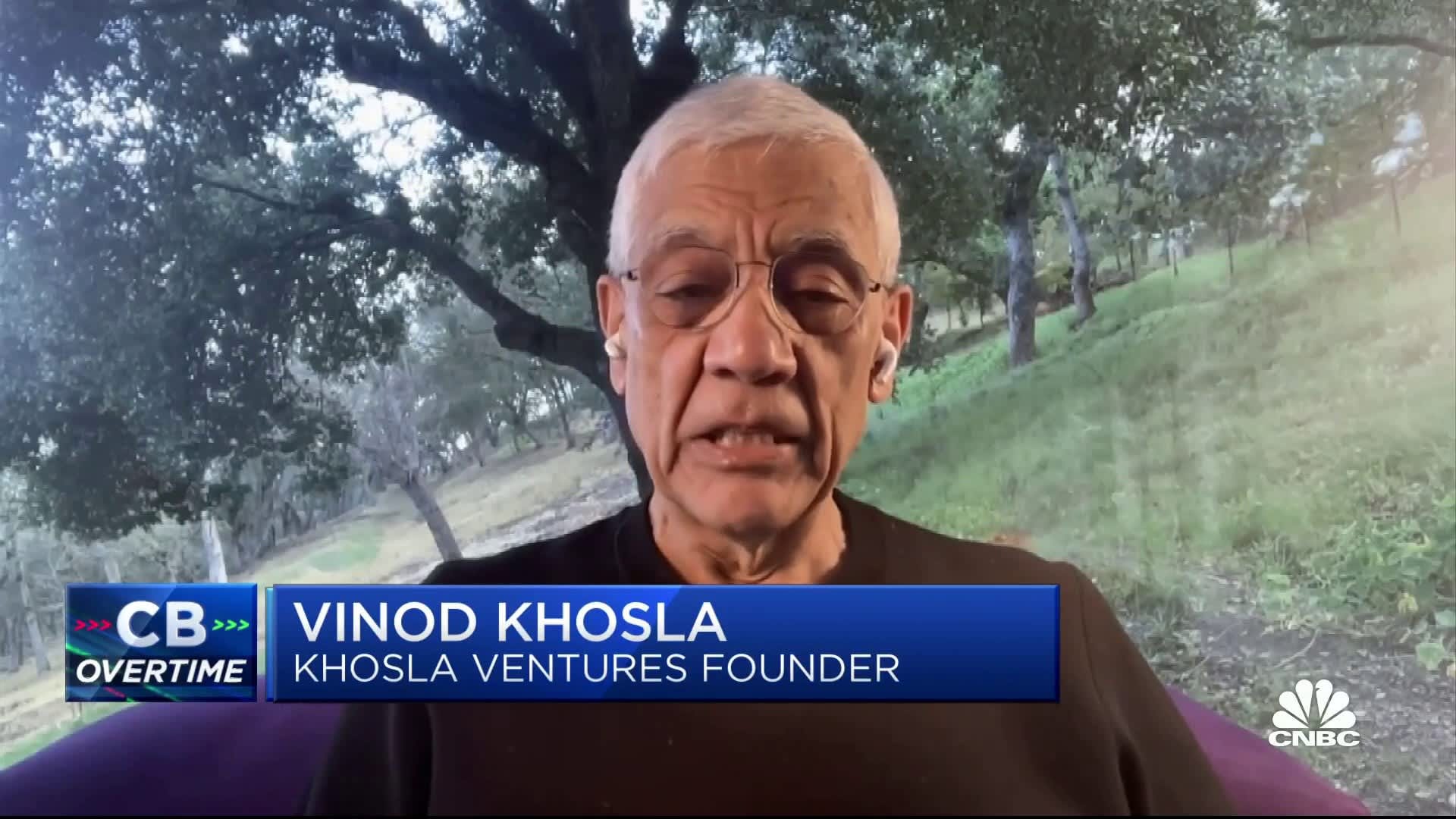
Khosla Ventures backed Square, Stripe, DoorDash, Instacart, Impossible Foods, Affirm, Opendoor, and Rocket Lab in their earliest, most uncertain days. In 2018, it became the first institutional investor in a research lab called OpenAI, years before most of the world had heard the term “large language model.” The firm also poured money into fusion energy, biofuels, and dozens of clean-tech bets that never worked out, because Khosla’s whole thesis was that the wins only need to be big enough to make the failures irrelevant. “I don’t mind failing,” he’s said, “but when we succeed it has to be worth it.” By 2025, Khosla Ventures was managing roughly $16 billion, with more than 1,500 investments and nearly 200 exits.
That philosophy is easy to admire from a distance and much harder to actually live by, because it requires being genuinely at peace with being wrong, in public, over and over, on the way to being right once, enormously. Khosla has said failure doesn’t actually matter; success does. The rejected Stanford applications. The clean-tech bets that went nowhere.
None of it slowed him down, because none of it was ever treated as the final word on what he was capable of.
From a Garage Idea to the Defending Super Bowl Champions
That same appetite for the long, improbable bet is what led, this July, to a Khosla-led group agreeing to buy the Seattle Seahawks for a reported $9.612 billion, a record price for an NFL franchise, and one of the largest team purchases in the history of professional sports. The Seahawks, fresh off their second Super Bowl title, were being sold by the estate of the late Paul Allen, whose will directed that the team be sold to benefit charitable causes. Khosla’s wife, Neeru, his girlfriend since he was 16 years old and married since 1980, will serve as the team’s controlling owner, with their son Neal expected to take an active role as well. As part of the deal, the Khosla family agreed to give up its existing minority stake in the San Francisco 49ers entirely, choosing full ownership of one team over a foothold in two.
“We are honored to be entrusted as the next stewards of the Seattle Seahawks,” Khosla said on behalf of his family. “We look forward to building on the winning legacy Paul Allen created and to earning the trust of the Seahawks organization and fans everywhere.” He added, in a social media post, that he was equally glad to see the proceeds from the sale go toward charitable causes, the same instinct for building something bigger than the individual payoff that had defined the rest of his career.
What the Whole Arc Actually Says
There’s a version of this story that’s just about money: a soy milk failure turned into a $9.6 billion football team, an immaculate rags-to-riches arc. That version misses the actual mechanism. The story about a kid with no connections in a New Delhi army household to the owner’s box at Lumen Field isn’t luck, and it isn’t talent alone. It’s a specific, repeatable habit of treating every rejection as a lesson and not his fate. The Stanford admissions office, the soy milk investors, every clean-tech bet that didn’t pan out, and then coming back with something more specific than before.
If you’re in your own stretch of being told no right now, the useful thing to take from Khosla’s life isn’t “never give up,” which is true but not especially actionable. It’s closer to what he actually did at Stanford: find out exactly what the no is about, close that specific gap, and keep showing up until the math changes in your favor.
“Not thinking it’s possible is a failure of imagination.”
- Vinod Khosla
The soy milk company still failed. He got into Stanford anyway. Both things were true at once, and only one of them ended up mattering.
The work you put in will be rewarded.
New article every Tuesday.
Be Bold. Be Real. Be Anomalous.
Follow for more Be Anomalous stories, conversations, and behind-the-scenes.
Website | Instagram | LinkedIn | YouTube | @iamsaimenon