


Four brands. Two paths. One question worth answering.
There’s a war of narratives in the startup world.
On one side: “Bootstrapping is freedom. VCs will ruin your vision. Build slow, build real.”
On the other: “You need capital to win. Without funding, you’re bringing a knife to a gunfight.”
Both camps have followers for their own reasons. Both camps have horror stories. And both camps, it turns out, have genuinely iconic success stories.
So instead of picking a side, let’s look at the evidence: four brands that built something remarkable, and what their funding path actually meant for how they got there.
The Bootstrapped Brands
1. Mailchimp — The $12 Billion “Failure” to Take VC Money
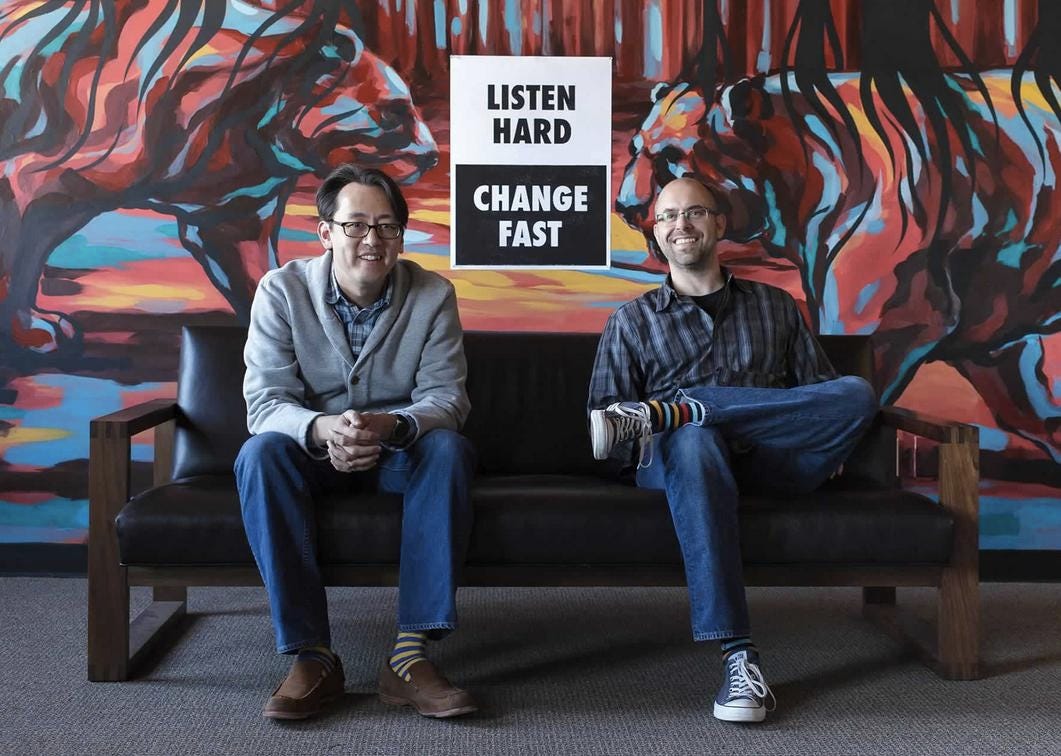
In 2021, Intuit acquired Mailchimp for approximately $12 billion. The founders, Ben Chestnut and Dan Kurzius, owned the entire company. They had never taken a dollar of outside investment.
Let that sink in.
Mailchimp started in 2001 as a side project. A web design agency needed an email tool for small-business clients, so they developed one. It stayed a side project for years. They were profitable almost immediately because they had to be. There was no runway to burn.
The turning point came in 2009, when they introduced a freemium model, offering up to 500 subscribers for free. Signups exploded. By 2012, they were sending 10 billion emails per month. By 2019, they hit $700 million in annual revenue.
What bootstrapping forced them to do:
Focus obsessively on the customer, not the pitch deck
Stay profitable at every stage, making them resilient during downturns
Own their product decisions completely, no board telling them to “move upmarket” or chase enterprise
Build at a pace that lets culture develop organically
Chestnut has said that not taking VC money meant they could serve small businesses, the “little guys”, without pressure to abandon them for higher-margin enterprise clients. That customer loyalty became a moat.
The irony? Many VC-backed competitors with greater resources (Campaign Monitor, Constant Contact) never caught up to them.
The lesson: Constraints create clarity. When you can’t outspend, you have to out-think.
2. Spanx — From $5,000 to a Billion-Dollar Brand, Alone
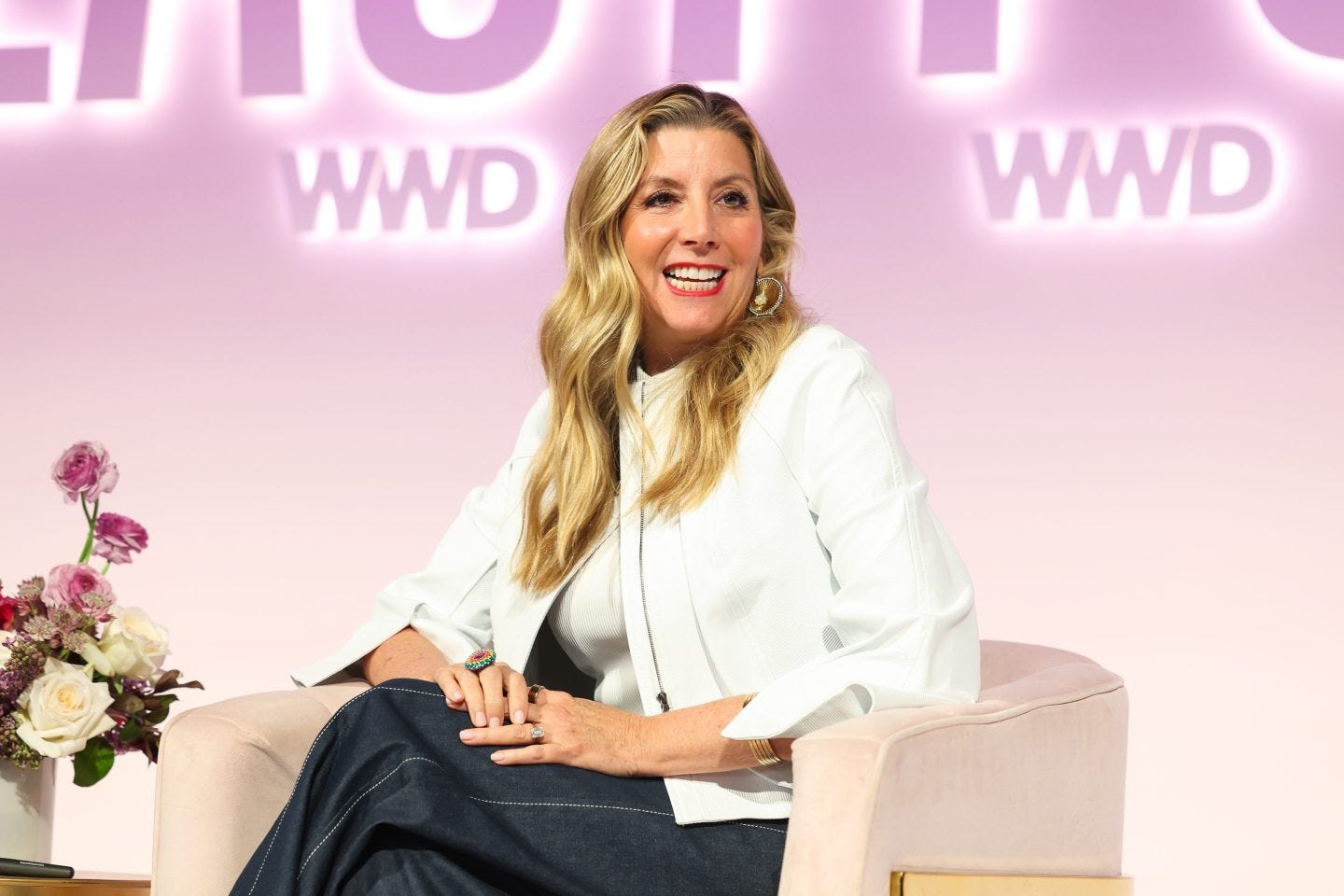
Sara Blakely started Spanx in 2000 with $5,000 in personal savings, a patent she filed herself after reading a book on patents, and a cold-calling hustle that would make most salespeople quit.
She was selling fax machines door-to-door when she had the idea. She couldn’t afford to hire a lawyer, so she wrote the patent herself. She couldn’t afford a PR firm, so she drove to Neiman Marcus, asked for 10 minutes, and convinced a buyer to stock the product in the room.
For the first two years, she ran the company entirely alone, taking orders, packing boxes, handling returns, and doing her own PR.
By 2012, she was on the cover of Forbes as the world’s youngest self-made female billionaire. Spanx was valued at over $1 billion. She still owned 100% of the company.
She finally received outside investment in 2021, a private equity deal with Blackstone that valued Spanx at $1.2 billion, only after two decades of building entirely on her own terms.
What bootstrapping forced her to do:
Get creative with marketing (she mailed her product to Oprah’s team with a handwritten note, Oprah featured it as a “Favorite Thing”)
Stay deeply close to the product and customer because she was the only one working on it
Make every hire count, every dollar matters
Prove the concept with real revenue before scaling
Blakely didn’t raise money because no one would give it to her at first. She has said investors didn’t take her seriously. So she just... kept going.
The lesson: Sometimes the “no” is a gift. Rejection from capital markets forces you to find validation where it actually matters, from customers.
The VC-Backed Brands
3. Airbnb — How $600K Saved a Company That Sold Cereal to Survive
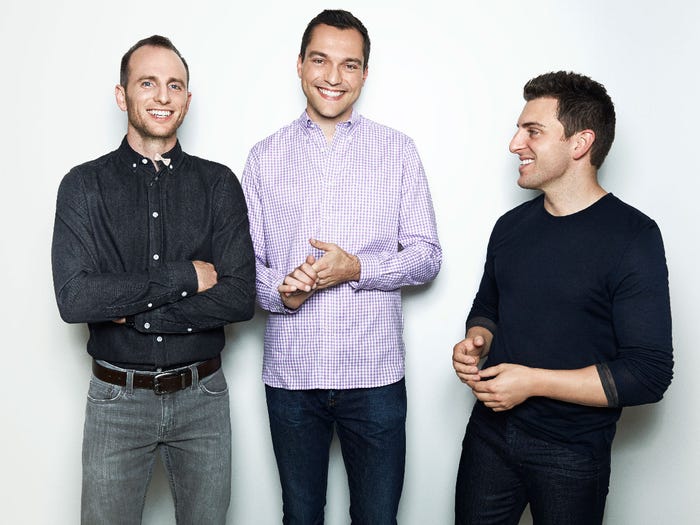
Before Airbnb became a $75 billion company, the founders were selling novelty cereal boxes to pay rent.
Brian Chesky and Joe Gebbia were so financially constrained that they created “Obama O’s” and “Cap’n McCain’s” limited-edition cereal boxes tied to the 2008 presidential election and sold them for $40 per box to fund the company. They raised approximately $30,000 from cereal sales. That money kept Airbnb alive long enough to get into Y Combinator.
Y Combinator invested $20,000 in early 2009. Sequoia and others followed. But the most important capital came from Andreessen Horowitz, which led a $7.2 million Series A in 2010, the round that enabled Airbnb to move from “interesting experiment” to “real company.”
The funding didn’t just buy them time. It bought them:
The ability to fight Wimdu, a Rocket Internet clone in Europe that was trying to outspend and out-hustle them internationally
Introductions to key operators, legal resources, and industry contacts
The credibility to attract world-class engineers when competing with Google and Facebook for talent
Speed in a marketplace business, getting to liquidity (enough hosts AND guests) is an existential race
Here’s what’s critical to understand about Airbnb and VC: the business model required scale to work. A marketplace with 200 listings is nearly worthless. With 4 million listings, it’s irreplaceable. The network effects required capital to reach escape velocity — bootstrapping would have meant building too slowly in a market where speed was survival.
Airbnb IPO’d in December 2020 at a valuation of $47 billion, closing its first trading day at over $100 billion. Total VC invested: roughly $6 billion over the company’s life.
The lesson: In marketplace and network-effect businesses, capital isn’t optional; it’s the driver.
4. Glossier — Building a Beauty Empire on Community and Capital
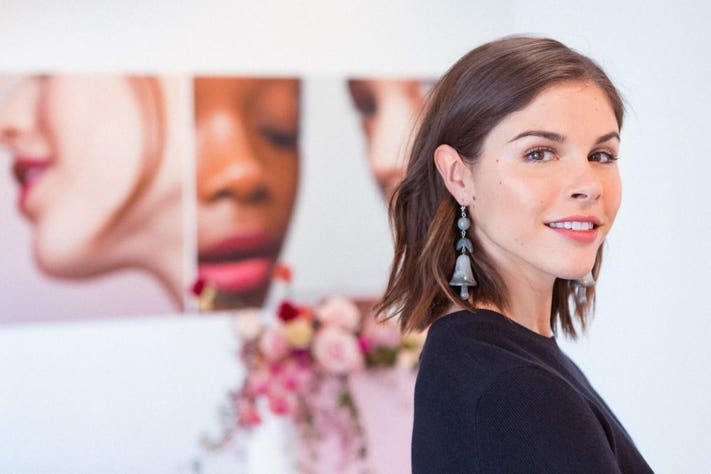
Emily Weiss launched Into The Gloss, a beauty blog, in 2010. It became a cult hit. In 2014, she raised $2 million in seed funding to launch Glossier — a direct-to-consumer beauty brand built on one radical idea: let customers co-create the products.
This wasn’t just marketing. Weiss and her team would post the question, “What do you want in a moisturizer?” to their community and then compile the responses. Product development driven by comment sections.
But here’s where the VC money mattered:
An $8.4 million Series A in 2015 let them invest in product development and build a real supply chain
A $24 million Series B in 2016 funded the kind of experiential retail and content that felt organic but cost real money to execute
By their Series D in 2019, Glossier was valued at $1.2 billion, and the capital allowed them to launch in new markets and categories
Glossier’s product is inseparable from its community, but the community required content, channels, and physical experiences to remain viable—that cost money. The brand could not have been bootstrapped to the same scale because its identity was the scale. Being everywhere, being cultural that takes capital.
The company experienced a rough patch in 2022 (layoffs, a leadership reset), which is worth noting: VC-backed companies can grow faster, but they can also overcorrect, overhire, and face pressure to justify their valuations in ways bootstrapped companies never do.
Still, Glossier redefined what a beauty brand could be, built a genuine community of millions, and created a template that every DTC brand since has tried to copy.
The lesson: When your brand is the community, and community requires content and presence at scale, capital accelerates the flywheel.
So: Bootstrap or Raise?
Here’s the honest synthesis:
Bootstrap when:
Your business can be profitable quickly (SaaS, services, CPG at a small scale)
You’re solving a problem that doesn’t require network effects
Optionality and ownership matter more to you than speed
You want to serve a customer segment that VCs might pressure you to abandon
You’d rather build a $100M business you own than chase a billion-dollar outcome you might not
Raise when:
You’re building a marketplace, platform, or network — where scale IS the product
You’re in a winner-take-most market where being second means being irrelevant
The window of opportunity is genuinely time-limited (regulatory, technological, cultural)
The capital will buy you asymmetric leverage, not just runway
The brands above didn’t succeed because of their funding path. They succeeded because their funding model aligned with their business model and ambitions.
Mailchimp didn’t need VC money because it could grow sustainably with customer revenue. Airbnb absolutely needed it because it was in an existential race with copycats who had unlimited capital.
The worst outcome isn’t choosing wrong between bootstrap and VC. It’s taking VC money for a business that didn’t need it (and losing ownership and control for no reason), or refusing capital for a business that did (and losing to a well-funded competitor while being philosophically pure).
Know your business. Know your market. Then choose accordingly.
If this was useful, share it with one founder who’s wrestling with this decision right now. It might be the most important choice they make.
New Article every Tuesday.
Be Bold. Be Real. Be Anomalous.