


This week felt different, not because it was easier, but because I could finally see it clearly. My son had spring break, and it also happened to be my birthday. My husband and I are always working to balance careers and childcare, to carve out real time with him. This week, that balance tilted toward me. My husband carried a heavier load at work and felt the weight of missing out. I had more flexibility, and so I had more of our son.
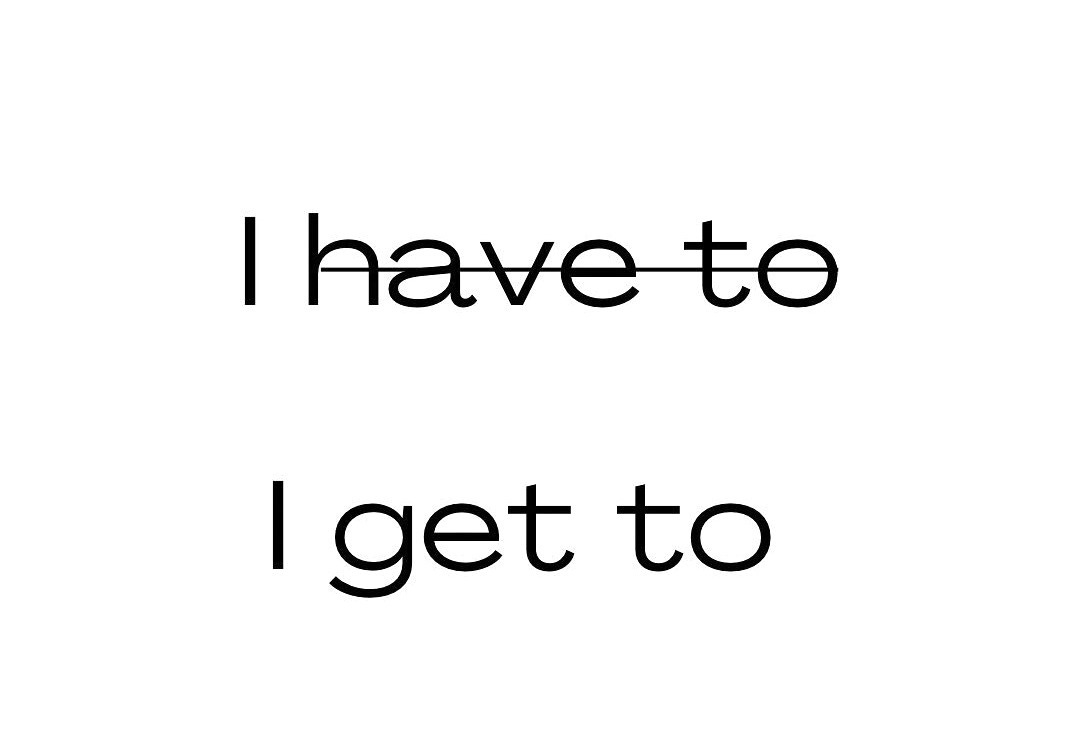
And here’s what struck me: a year ago, maybe two, I would have said I have to take care of him this week. A quiet resentment buried in the phrasing, the kind you don’t even notice until it’s gone. This week, without really planning it, I noticed myself thinking differently: I get to be here with him.
Two words —“have to” vs. “get to”—and the whole shape of the day shifts. Not the tasks. Not the mess, the noise, or the exhaustion. Just the frame around them.
Watching my husband grieve the moments he was missing made it real for me. Time with a child isn’t a given. It isn’t owed. It’s a gift, and like most gifts, it’s easiest to take for granted right up until the moment you can’t have it.
Don’t get me wrong, I’m not saying every day is easy. Some days it does drive you a little crazy. But the mindset shift doesn’t ask you to pretend otherwise — it just changes how you hold it. It invites you to be in the moment rather than enduring it.
And once you see it, you can't unsee it. It starts to reach into everything. I get to work out. I get to do my work. I get to be with my family. None of it is guaranteed. All of it is precious.
That’s been my realization this week: Savour it. Take the chance. You don't know how long you get to do any of it.
Reframe Your Mindset
Notice the language you use Start by just catching yourself. When you hear "I have to," pause and ask: Is this actually something I chose, or something I'm lucky to have? You don't have to force a reframe every time; just noticing builds the habit.
The subtraction exercise. Imagine the thing is gone. The school pickup, the work meeting, and the dinner to cook. Who would you be without it? Often, what feels like a burden is actually evidence of a life you built: a job, a family, a home. Subtraction makes the invisible visible.
Anchor to the “why” behind the “what.” Instead of thinking about the task, think about what it represents. Driving your kid to practice = you have a healthy child who gets to play. Paying bills = you have a home and a life running. The task is just the surface; underneath is the meaning.
Change the story you tell others. When someone asks how your week was, notice if you lead with a complaint or with gratitude. You don't have to pretend it was perfect but try ending on what you were glad to have, even in a hard week. How we narrate our lives shapes how we experience them.
Gratitude isn't pretending the hard days don't exist. It's making sure the good ones don't pass unnoticed.
What I’m Reading
Grit — Angela Duckworth (Finishing)
This one really stays with you. It breaks down the idea that success isn’t just about talent; it’s about consistency, resilience, and showing up even when it’s hard. What I’ve been reflecting on most is how grit isn’t always loud.
A Different Kind of Power - Jacinda Ardern
It reflects on her journey into leadership and the personal values that guided her time in office.It explores how empathy, resilience, and compassion can redefine strength in politics and inspire a more human-centered approach to power.
What Else Dropped This Week
Off Script
How Shahezad Left IT to Build Cousins Burger (Lessons on Scaling & Risk)
Under the Hood
Note to My Future Self
The practice is simple, even when it isn’t easy. Notice the language. Anchor to the meaning. Show up for the ordinary moments as if you know because you do know, that they won’t last forever.
“I have to” keeps you surviving your life. “I get to” lets you live it.
That’s the whole shift. Two words. One choice. Made again and again, on the hard days especially.
Be bold. Be real. Be Anomalous.
— Sai Menon